

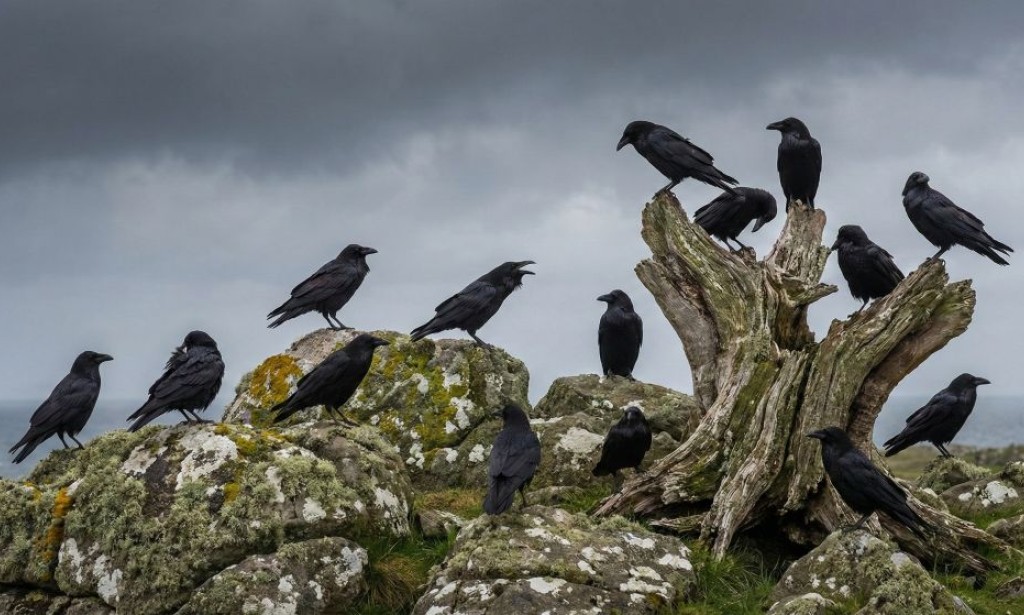

1. Messengers from the Divine
In numerous traditions, ravens are viewed as couriers between worlds. Their ability to soar high into the heavens linked them to the realm of the gods. In Norse mythology, the all-father Odin had two ravens, Huginn (Thought) and Muninn (Memory), who flew across the mortal world each day, gathering information and whispering it into his ear.
Similarly, in some Native American cultures, the raven is seen as a messenger from the Great Spirit, bringing news, warnings, or divine insight to those who are attentive.
2. Symbol of Transformation and Change
The raven is a masterful symbol of metamorphosis. Its glossy black plumage, which shines with iridescent blues and purples in the light, represents the idea that profound change and beauty can emerge from the dark, unknown void.
Witnessing a raven, especially during a time of personal upheaval, can be a spiritual nudge that you are in a potent period of shedding the old to make way for the new. It reminds us that creation often begins in the dark.
3. The Psychopomp: Guide for Souls
One of the most universal and poignant roles of the raven is that of the psychopomp—a conductor of souls from the land of the living to the afterlife. Its association with battlefields and its perceived comfort around death positioned it as a sacred guide.
The raven does not fear the great mystery; it navigates it. Spiritually, it can appear as a sign of comfort when grieving, suggesting a loved one’s soul is being escorted peacefully or that the veil between worlds is thin.
4. Harbinger of Prophecy and Insight
Ravens have long been considered oracles. Celtic seers and shamans observed their flight patterns, numbers, and calls to divine the future. This ties directly to their intelligence and perceived connection to hidden knowledge. When a raven appears in your awareness repeatedly, it may be a call to trust your own intuition and foresight.
It encourages you to look deeper, listen to the subtle whispers of your psyche, and foresee potential outcomes before they unfold.
5. Embodiment of Magic and the Unknown
The raven is intrinsically linked to the arcane and the mystical. In many stories, it is a familiar to witches, wizards, and those who practice the old arts. Its black color, the color of the night and the unseen, symbolizes the great cosmic mystery.
The raven teaches that true magic lies in exploring the unknown, both in the world and within ourselves. It invites us to embrace shadow work—the process of confronting and integrating our hidden aspects.
6. The Clever Trickster and Shape-shifter
Across cultures, from the Pacific Northwest to ancient Greece, Raven is a classic trickster archetype. These stories often depict Raven as clever, mischievous, and a boundary-breaker who steals sunlight, fire, or water for humanity. This role is not about malice but about challenging the status quo, using wit to bring about necessary change.
Spiritually, the trickster raven appears when we are taking ourselves too seriously or need a creative, unconventional solution to a problem.
7. Symbol of Fearless Intelligence and Problem-Solving
Scientific studies confirm what folklore always knew: ravens are exceptionally intelligent. They use tools, solve complex puzzles, and plan for the future. Spiritually, the raven is a totem of strategic thinking, adaptability, and cunning.
It encourages you to use your mind creatively, to think several steps ahead, and to approach challenges from a new angle. When faced with a difficult decision, calling on raven energy can help you find a ingenious path forward.
8. Guardian of Sacred Law and Balance
In some traditions, particularly certain Native American beliefs, the raven is seen as a keeper of sacred law. It is a witness to the world and holds the knowledge of the natural order. The raven’s appearance can be a reminder to act with integrity, to honor your promises, and to restore balance where it has been lost. It symbolizes cosmic justice and the idea that all actions have consequences within the great web of life.
9. Omen of Death and Rebirth
Perhaps the most well-known association is the raven as an omen of death. However, this is often misunderstood in a purely literal and fearful sense. Spiritually, raven signifies symbolic death—the end of a phase, relationship, career, or outdated belief system. It heralds a necessary ending that makes rebirth possible. The raven does not bring death; it announces transformation, urging us to release what no longer serves our highest good so that new life can emerge.
10. Connection to Ancestral Wisdom
Ravens are known for their long memories and complex social structures. This links them spiritually to ancestral knowledge and lineage. A raven’s presence can be a sign that your ancestors are trying to communicate with you, offering guidance or reassurance. It may also be a prompt to explore your family history, heritage, and the old wisdom that flows in your blood, suggesting that answers lie in the past.
11. Totem of Solitude and Self-Reflection
While sometimes social, ravens are often seen alone or in pairs, comfortable in their own company. This makes them a powerful totem for solitude, introspection, and inner discovery. The raven teaches that it is in quiet moments of aloneness that we often hear our truest voice. It encourages periods of retreat and self-reflection to understand our deepest desires and truths, away from the noise of the world.
12. Symbol of Protection and Vigilance
With their sharp eyes and commanding presence, ravens are natural sentinels. In many myths, they serve as watchful protectors. To have a raven as a spiritual guide is to have a guardian against unseen threats or negative energies. They are believed to see all angles of a situation. Their appearance can be a warning to be more vigilant, to protect your energy, or an assurance that you are being watched over.
13. Catalyst for Personal Power and Courage
The raven’s fearless nature, often living in harsh climates and confronting larger animals, makes it a symbol of personal power, sovereignty, and courage. It calls you to step into your own authority, to speak your truth with confidence, and to walk your path without apology. The raven empowers you to claim your space in the world and to defend what is rightfully yours, be it physical, emotional, or spiritual.
14. Representation of Synchronicity and Mystery
Ravens have a knack for appearing at uncannily perfect moments, often during times of synchronicity—meaningful coincidence. This reinforces their role as connectors to the mysterious flow of the universe. When you see a raven right after thinking a significant thought or asking a profound question, see it as a confirmation from the universe. It’s a sign that you are in alignment and that magic is at play in your everyday life.
15. The Unifier of Dualities
Finally, the raven is a master of paradox. It is a bird of both light and dark, life and death, trickery and wisdom. Its glossy black feathers hold all colors within them. Spiritually, the raven represents the integration of opposites within the self: the light and shadow, the conscious and unconscious, the human and the divine. It teaches that wholeness comes from embracing all parts of our being without judgment.
Raven Symbolism Across Cultures: A Quick Reference
| Culture / Tradition | Primary Spiritual Role | Key Symbolism |
|---|---|---|
| Norse Mythology | Messenger & Observer | Wisdom, Knowledge, Memory (Huginn & Muninn) |
| Celtic Lore | Prophet & Omens | Prophecy, Battle, Protection, Connection to Morrigan |
| Native American (Pacific NW) | Creator & Trickster | Creation, Transformation, Bringer of Light/Water |
| Ancient Greek | Messenger of the Gods | Prophecy, Associated with Apollo (god of prophecy) |
| Christian & European Folklore | Ambiguous Symbol | Sometimes an omen of death; other times solitude & God’s provision. |
| Shamanic Traditions | Psychopomp & Shape-shifter | Soul Guide, Master of Magic, Travel between Worlds |
| Modern Spirituality | Personal Totem | Transformation, Shadow Work, Mystic Insight, Intelligence |
Conclusion
Ultimately, the spiritual meaning of a raven is as deep and multifaceted as the bird itself. Its appearance in your life is rarely casual. Whether it croaks from a tree, glides across your path, or visits in a dream, pause and listen. It may be urging you to transform, to think more cleverly, to honor an ending, or to claim your personal power.
The raven is a timeless guide, inviting us to look beyond the veil of the ordinary and explore the profound magic and mystery that exists within and all around us. By understanding its messages, we can navigate our own spiritual journeys with greater wisdom, courage, and insight.
Related FAQs
1. Is seeing a raven a bad omen?
Not necessarily. While often linked to death, spiritually this usually means symbolic transformation—the end of a phase to allow rebirth. Context and your intuition matter. A raven’s appearance is more often a call for change, insight, or a message than a literal prediction of misfortune.
2. What’s the difference between a raven and a crow spiritually?
Both are intelligent, but ravens are typically seen as more solitary, mystical, and connected to deeper prophecy and the underworld. Crows are often associated with community, everyday magic, and messages from the recent past or ancestors. Ravens are generally considered the more powerful, ancient symbol.
3. What does it mean when a raven visits you repeatedly?
Frequent visits suggest a persistent message or sign. It may indicate you are in a major period of transformation, that you need to use your intelligence to solve a problem, or that you are being protected and observed. Pay close attention to your thoughts and circumstances when it appears.
4. Are ravens connected to witchcraft or magic?
Yes, historically and spiritually. Ravens are seen as familiars and symbols of the arcane, associated with shadow work, mystery, and ancient knowledge. Their link to prophecy and the unseen world makes them powerful symbols in various magical and esoteric traditions.

You must be logged in to post a comment.