

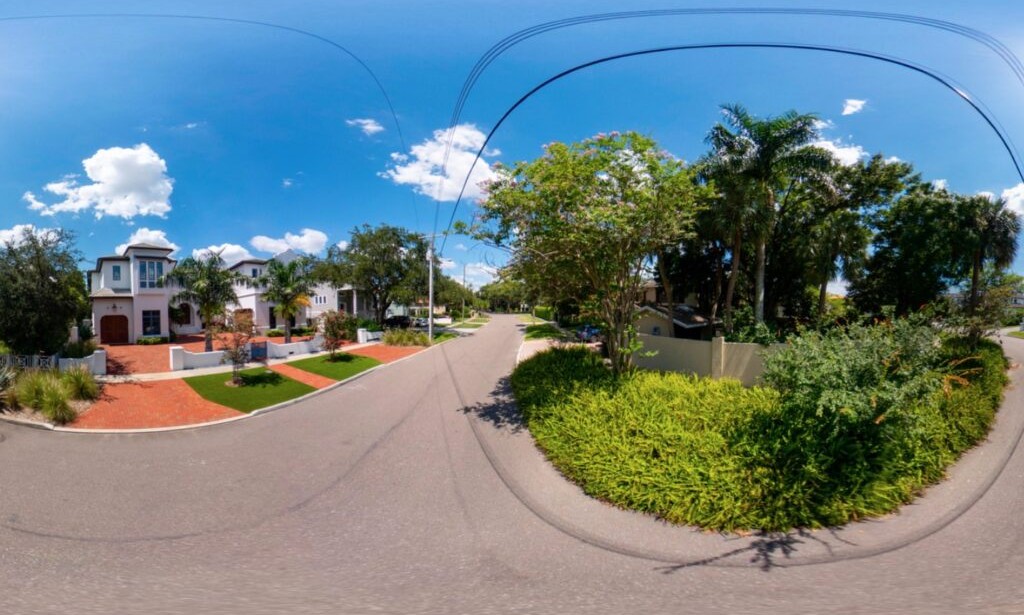

180 vs 360 Degree Security Cameras

80-degree and 360-degree security cameras refer to the field of view (FOV) that the cameras can capture. 

This table provides a quick overview of the key differences between 180-degree and 360-degree security cameras.

Feature 180-Degree Cameras 360-Degree Cameras
Field of View (FOV) Wide-angle 180 degrees Full panoramic 360 degrees
Coverage Wide, but not complete Complete coverage without blind spots
Installation/Placement Wall or corner mount Ceiling mount for optimal coverage
Use Cases Retail, hallways, specific zones Warehouses, parking lots, open spaces
Cost Generally more affordable Potentially more expensive due to complete coverage
Resolution Focused detail within 180 degrees Detail distributed across 360 degrees

180 vs 360 Degree Security Camera

Here’s a comparison between the two:

1. Field of View (FOV):

180-Degree Cameras: These cameras provide a wide-angle view of 180 degrees, capturing everything in their path within that range. They are suitable for covering larger areas, such as hallways or corners.

360-Degree Cameras: These cameras offer a complete panoramic view, capturing a full 360-degree scene. They can cover an entire room or open space without any blind spots.

2. Coverage:

180-Degree Cameras: These cameras are suitable for capturing a wide but not complete view. They may require multiple cameras to cover an entire area or room effectively.

360-Degree Cameras: These cameras can cover an entire space without any blind spots, providing comprehensive coverage with a single camera.

3. Installation and Placement:

180-Degree Cameras: Typically, 180-degree cameras are mounted on walls or in corners to capture a wide area. Placement is crucial to ensure optimal coverage.

360-Degree Cameras: These cameras are often ceiling-mounted for optimal coverage. They eliminate blind spots, making them suitable for open spaces.

4. Use Cases:

180-Degree Cameras: Commonly used in retail stores, hallways, and areas where a wide-angle view is required. They are effective for monitoring specific zones within a larger space.

360-Degree Cameras: Ideal for monitoring large open areas, such as warehouses, parking lots, or rooms where it’s important to have a complete view without any blind spots.

5. Cost:

180-Degree Cameras: Generally, these cameras are more affordable than 360-degree cameras. They may be a cost-effective solution for applications where a complete panoramic view is not necessary.

360-Degree Cameras: Due to their ability to provide complete coverage, 360-degree cameras can be more expensive. However, they may eliminate the need for multiple cameras in certain scenarios.

6. Resolution and Image Quality:

180-Degree Cameras: The image quality and resolution may be more focused within the 180-degree field, potentially offering higher detail in the captured area.

360-Degree Cameras: The image quality is distributed across the entire 360-degree view, so the level of detail may vary across different parts of the scene

Enjoyed this article? Stay informed by joining our newsletter!

Comments

You must be logged in to post a comment.

About Author