


Lakanwal joined Unit 03, also known as the Kandahar Strike Force, sometime around 2011 and quickly gained a reputation as a stellar soldier, working with U.S. forces in one of the most dangerous parts of Afghanistan, according to a former U.S. intelligence officer who served in Afghanistan and has knowledge of the CIA-trained “Zero Units.”
As part of Unit 03, an elite Afghan counterterrorism team working in parallel with U.S. special operators and spies, Lakanwal had to go through multiple layers of vetting: to see if he was good at following orders, reliable during what were often chaotic firefights and loyal to the U.S. advisers who joined them on the missions, said the former officer, who spoke on the condition of anonymity because they were not authorized to speak about the still-active investigation. This vetting process occurred frequently — a constant reassessing, this person and another former U.S. official said.
The course of Lakanwal’s journey from a trusted U.S. battlefield ally to the suspected shooter of two National Guard members on the streets of downtown D.C. remains unclear, in part.
But like many Afghans who had worked for the United States and came to this country after the chaotic August 2021 U.S. withdrawal from Afghanistan, he appeared to struggle to adapt to his new circumstances and refused to take many of the entry-level jobs available to him as a recent immigrant.
“These guys were elite soldiers who had a career and homes in Afghanistan, but when they came here they lost everything. They are told ‘You need to work,’ but they don’t have the skills,” said a former senior Afghan commander now living in the United States, who didn’t know Lakanwal personally but has extensive contacts in the Afghan refugee community, including with other former Zero Unit fighters.
“They’re not ready to just integrate themselves into the community,” said the former commander, speaking on the condition of anonymity out of concern that discussing the sensitive issue could affect their immigration status.
Top Trump administration officials have tried to characterize Lakanwal’s alleged violent crime as a by-product of President Joe Biden’s hasty evacuation of U.S. troops from Afghanistan, and the influx of tens of thousands of Afghans to the United States that these officials say took place without proper vetting.
But interviews with former Afghan fighters and the Americans who worked with them suggest a more complex tale.
Lakanwal is believed to be from Khost province in southeastern Afghanistan. His official documents show his age to be 29, but the former U.S. intelligence officer said that is probably not accurate, given the CIA’s restrictions against allowing anyone younger than 18 to join.
Little else is publicly known about his early life. He was a member of Unit 03’s Delta company, the former senior Afghan commander said. The unit was based in Kandahar but operated across south and southeast Afghanistan, including in Zabul and Ghazni provinces. Lakanwal’s expertise was in urban settings where he focused on targeting, the former Afghan commander said.
In joining the Zero Units — Afghan squads organized by the CIA and overseen by the spy agency’s paramilitary branch and U.S. Special Forces — Lakanwal entered a world of violent, almost daily combat.
“They were in the heaviest fighting — it was almost every day,” said Mick Mulroy, a retired Marine and CIA paramilitary officer who served with the Afghan teams in multiple places. The Afghans were “up front” in missions to capture or kill suspected terrorists, with U.S. advisers accompanying and sometimes joining in risky room-to-room searches, he said.
Mulroy said he had never heard of any underage Afghans being permitted to join the units.
Human Rights Watch said in a 2019 report that it had documented serious abuses by CIA-backed strike forces, including extrajudicial executions and enforced disappearances. The CIA has previously said such reports do not reflect the realities of a war in which the Taliban often placed innocent people in harm’s way and distorted the details of events.
Lakanwal was a “solid” soldier with “decent English,” according to a person who worked with the Zero Units in Afghanistan and met him in the months before the Taliban takeover of the country.
Lakanwal’s unit was conducting an average of three operations a week, largely targeting individuals associated with al-Qaeda and the Islamic State, according to the person, who spoke on the condition of anonymity because they were not authorized to speak publicly. Lakanwal operated as a “door breacher,” the team member assigned to place explosive charges on a door so it could be blown off during a night raid, said the person.
“They are extremely proficient in combat, very loyal,” they said, speaking about the Zero Units in general.
Zero Units had very little turnover because they were well-paid compared with other Afghan forces and the position came with a lot of prestige, the individual said. Mulroy said that, unlike the U.S. military, the CIA suffered no “green-on-blue” attacks, where Afghans turned their weapons on their American partners.
Later, as U.S. forces were helping Afghans and others flee Kabul as the Taliban retook power in August 2021, Lakanwal’s unit secured the Kabul airport, first clearing the runways to allow for planes to land and later holding the perimeter during the grueling and chaotic evacuation.
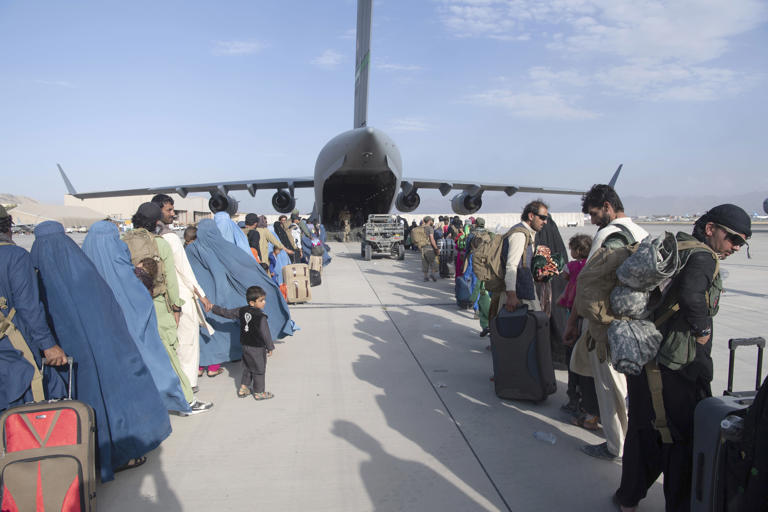
Lakanwal arrived in the U.S. in September or October 2021 through Operation Allies Welcome (OAW), a Biden-era program that helped resettle roughly 76,000 Afghan nationals, many of whom had worked for the United States, after the U.S. military withdrawal.
Lakanwal, in addition to his earlier vetting to join the Zero Units, underwent extensive vetting by U.S. counterterrorism authorities, including the CIA and the National Counterterrorism Center, before entering the United States, according to people with direct knowledge of the case.
Initially, once Zero Unit evacuees were brought to U.S. soil, the CIA did not want to share their identities with other agencies — to protect them and family members still in Afghanistan from being targeted by the Taliban or the Islamic State, and to guard against having the names of their U.S. government handlers revealed. The agency had to be persuaded — and eventually was — that if it didn’t share the identities with other U.S. agencies for vetting, it was likely that the evacuees would at some point pop up on the radar of the FBI, potentially subjecting them to investigation, which would further upend their lives.
Lakanwal was confident that the tight bond he shared with his former U.S. advisers in battle assured him and his family a stable life in the United States. But that didn’t happen.
After receiving humanitarian parole, allowing them to enter the U.S. temporarily as part of the evacuation effort, he and his family settled in Washington state.
Before his arrival, Lakanwal received what is known as a “Chief of Mission” letter vouching for his contributions to the U.S. war effort, a required step in the process to obtain a Special Immigrant Visa and to establish lawful permanent residency in the United States, according to a former senior law enforcement official briefed on the matter. The official spoke on the condition of anonymity because they were not authorized to publicly discuss Lakanwal’s status.
Lakanwal’s humanitarian parole expired in mid-2024, before his visa status was fully approved, so he applied for political asylum instead late last year and was approved in April 2025, multiple people familiar with the matter said.
But his grant of asylum did not come with a renewed work authorization card, which made it difficult to find a job, the former U.S. intelligence officer said, citing conversations with Lakanwal’s fellow Unit 03 fighters after the shooting. The inability to support his family weighed heavily on Lakanwal.
He worked briefly this summer as an independent contractor for Amazon Flex, a program that employs drivers to deliver packages with their own vehicles, a company spokesperson said.
Initially, Lakanwal and his brother lived together in Washington with their families to save money, but the two brothers began to fight over finances, the former senior Afghan commander said.
Many former Zero Unit fighters have been struggling, both financially and mentally, during their time in the United States as they deal with their war injuries, any post-traumatic stress carrying over from battle, and an inability to adjust to life in a country whose language and culture they don’t understand.
“It’s still unclear what led this individual to commit such a violent and horrific act — whether a mental breakdown or something more severe,” Geeta Bakshi, a former CIA officer who served in Afghanistan and now runs FAMIL, a nonprofit that assists Afghans who served with the U.S. government, said in a statement. Bakshi said her organization had not encountered Lakanwal.
“FAMIL has assisted members of this community who are dealing with isolation and invisible scars from the war,” her statement said. “Helping them integrate safely and successfully is critical for them, their families, and their new communities.”
The combination of years of high-stress combat in Afghanistan and a different kind of stress in the United States — struggling to support a family in a foreign environment — leaves many of these young men particularly vulnerable to falling through the cracks, the former Afghan commander said.
The Afghan commander warned officials about that threat in both the Biden and the Trump administrations, the commander said, but few paid attention before the worst happened.
At Trump’s urging, U.S. Citizenship and Immigration Services said Friday that it had paused issuing visas for Afghan nationals.
The shooting and its aftermath are “a disaster for the Afghan community,” the former commander said.

You must be logged in to post a comment.