

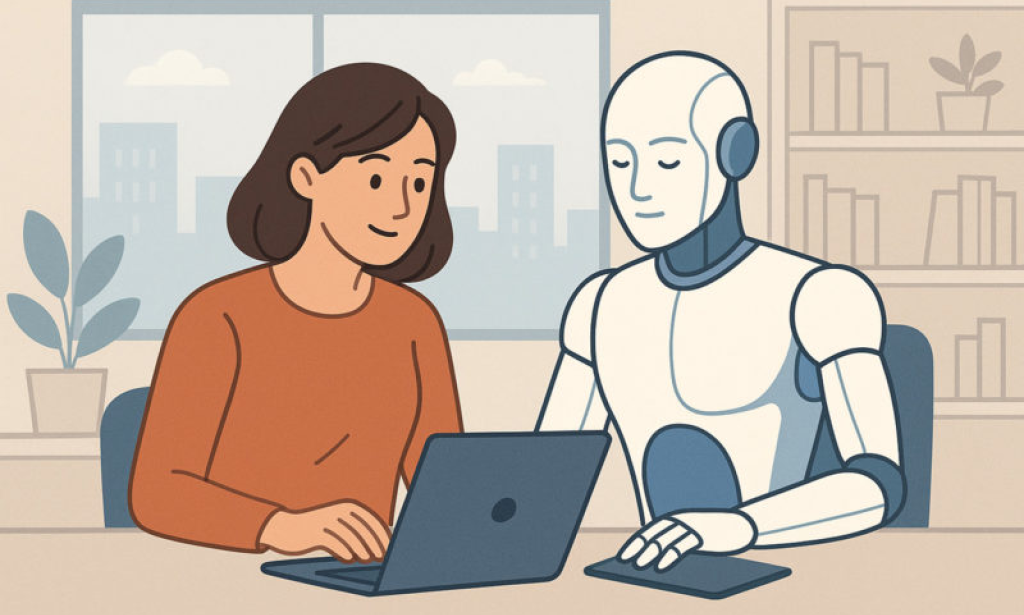

According to recent reports, millions of people are relying on AI as their mental health advisors, a trend driven by a surge in demand for mental health support. While AI tools like ChatGPT offer convenient mental health advice, experts point out that these tools cannot replace professional psychotherapy because they may reinforce false beliefs, lack clinical judgment, and exhibit biases that overly cater to users.
Current AI-powered mental health recommendations primarily rely on discrete classifications, such as binary anxiety detection or category responses, which limits their depth, especially given the shortage of psychotherapists. Experts recommend a shift towards continuous, multidimensional analysis, modeling psychology as a dynamic spectrum that integrates immediate emotional, cognitive, behavioral, and social dimensions.
This shift not only more accurately reflects an individual's mental state but also provides more targeted interventions when facing mental health crises. Experts point out that AI can serve as a "learning assistant," helping users change habits and providing human supervision when necessary to avoid replacing face-to-face support.
However, experts also emphasize that the use of AI must be accompanied by strict ethical guidelines and regulations to ensure it does not harm users. With the increasing demand for mental health services, AI's multidimensional analytical capabilities offer hope, but it must serve as a bridge to human care, not a replacement.

You must be logged in to post a comment.