

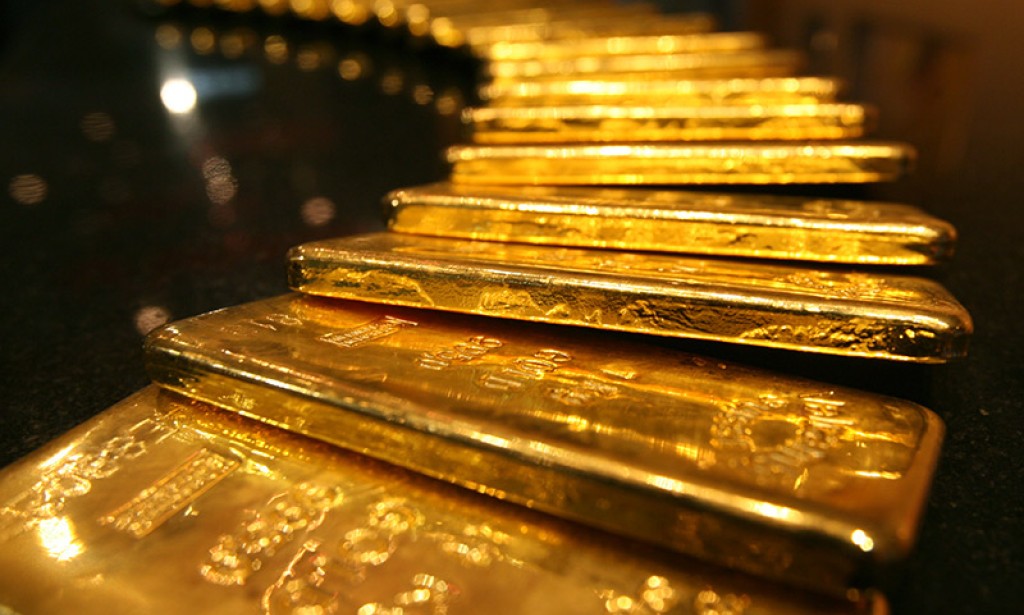

According to one market strategist, however, there remains significant upside potential for gold prices in the new year.
Chantelle Schieven, Director of Research at Capitalight Research, stated in a recent interview that gold is not only experiencing an unprecedented rally, but is also poised to climb for the third consecutive year — a development that signals an escalation of the structural shift sweeping across global financial markets.
Drawing an analogy, she noted that while tectonic plates in the Earth’s mantle move at an extremely slow pace, they can also undergo moments of intense, abrupt transformation. In her view, 2025 represented one such seismic shift that may have reshaped the landscape of financial markets.
Despite growing concerns that this year’s gold rally has pushed the market deep into overbought territory, Schieven emphasized that investors should not conflate high prices with market weakness.
“Even if gold prices are in a bubble territory, it does not mean they will fall next year — or anytime soon,” she remarked.
Schieven further pointed out that central banks around the world have been aggressively ramping up their gold reserves since 2022, cementing the metal’s pivotal role in the market and enabling it to keep generating value for investors. She added that this official-sector demand has created a floor of support for gold prices that did not exist before.
Against this backdrop, she projected that gold prices could “easily surge to $5,000 per ounce” early next year. Schieven also stressed that while central bank demand will remain a key pillar of support for the gold market, she expects investment demand to emerge as the primary driver of price gains in 2026.
Gold prices may seem “overextended,” she added, but they are “not in a bubble” — and relative to the macro risks facing investors, the allocation of gold in various portfolios remains unduly low.
The Federal Reserve, Inflation and Uncertainty
At its latest monetary policy meeting, the Federal Reserve struck a relatively upbeat tone on economic activity and the inflation outlook, projecting that inflation will gradually return to its target level. Schieven, however, expressed skepticism over whether price pressures will abate as quickly as policymakers anticipate.
She pointed out that structural factors — deglobalization, trade fragmentation and years of underinvestment in commodities — will inherently continue to stoke inflation.
Schieven added that even moderate inflation complicates the role of bonds as a traditional safe-haven asset. For investors grappling with negative real yields, gold is no longer viewed as a speculative hedge; instead, it has become a tool for diversifying core investment portfolios.
“The Federal Reserve is making optimistic projections that inflation will decline. Bonds no longer offer the same sense of security — especially if inflation does not fall as much as policymakers expect,” she said. “If investors believe inflation will remain elevated, buying bonds right now is not the optimal investment choice.”
Schieven also noted that the Federal Reserve has embarked on a quiet yet consequential policy shift, including adjustments to its balance sheet, which will help keep bond yields in check. These measures may buy the market some time, but they will do little to restore confidence in long-term monetary stability — another tailwind for gold.
She struck an optimistic note, saying that the $5,000 target for next year is achievable, but it may only be a short-term milestone within a longer-term uptrend. Nevertheless, while the overall trajectory remains upward, she expects relatively high volatility, leading to healthy market corrections.

You must be logged in to post a comment.