



If you’ve ever had a routine physical exam, you may have received a diagnosis of chronic superficial gastritis—and like many people, your first thoughts are likely: Is this serious? Could it turn into stomach cancer?
The progression from gastritis to stomach cancer is a well-documented, slow process that typically unfolds in four stages: chronic superficial gastritis → chronic atrophic gastritis → intestinal metaplasia → gastric cancer. This is not a rapid shift; it varies drastically by individual, taking anywhere from 1 to 2 years in some cases, and up to 5 or even 10 years for others. Understanding each stage is key to knowing the risks and how to act.
Chronic Superficial Gastritis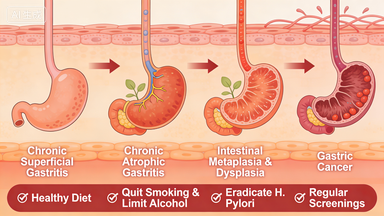
This is the most common gastric diagnosis for people who experience stomach pain—and it’s far less alarming than it sounds. Your stomach works tirelessly day in and day out, and the foods we eat naturally leave minor marks on the gastric mucosa. For the vast majority of people, this diagnosis does not mean there is actual chronic inflammation of the stomach lining. Instead, it often points to functional dyspepsia or non-ulcer dyspepsia (stomach discomfort without physical damage to the lining).
The good news: this stage is highly reversible with proactive treatment and consistent healthy lifestyle habits. Simple changes can quickly ease symptoms and reverse the mild mucosal changes associated with it.
Chronic Atrophic Gastritis
Chronic atrophic gastritis is a more advanced condition characterized by the shrinkage of the gastric mucosa, a reduction or complete loss of the stomach’s intrinsic glands, or the replacement of these glands with intestinal or pseudopyloric glands—changes that alter the stomach’s normal structure and function.
Thanks to modern medical research, we now know this stage is not a permanent diagnosis. When detected early and treated with consistent, standardized care, the atrophied glands can recover. In many cases, chronic atrophic gastritis can be reversed to chronic superficial gastritis or even fully cured, stopping the progression in its tracks.
Intestinal Metaplasia & Dysplasia
When gastritis recurs repeatedly, the stomach lining is damaged and repairs itself over and over again. This constant cycle can cause an abnormal change: the stomach grows cells that are normally only found in the intestines—a condition known as intestinal metaplasia. When combined with dysplasia (abnormal cell growth), these changes are widely recognized as precancerous lesions. Without intervention, this stage can progress to early-stage stomach cancer.
Gastric Cancer
If the precancerous changes of intestinal metaplasia and dysplasia are left untreated, the abnormal cell growth can develop into invasive stomach cancer. This final stage is the result of long-term, unaddressed gastric damage—but it is almost always preventable with early action at the earlier stages.
How to Stop Gastritis from Developing into Cancer
Stomach cancer is not an overnight occurrence, and its development is heavily influenced by lifestyle and medical care. Here are evidence-based steps to protect your gastric health and lower your cancer risk:
Adopt a Gut-Healthy Diet
Your stomach is the primary site of food digestion, so diet has an outsized impact on its health. Focus on a diet rich in fresh fruits and vegetables, which provide vitamins, minerals and antioxidants that support mucosal repair. Limit spicy, irritating foods, leftover meals, and smoked or processed foods—all of which can irritate the stomach lining. Add moderate amounts of high-quality protein and soy products to your diet to boost nutrition and strengthen your immune system, helping your body fight off damage and infection.
Quit Smoking & Limit Alcohol
Smoking is linked to an increased risk of stomach cancer: cigarette smoke contains dozens of carcinogenic and tumor-promoting substances that damage the gastric mucosa and accelerate abnormal cell growth. Alcohol, a known carcinogen, irritates the stomach lining at high concentrations, damaging tissue and making it easier for harmful substances to be absorbed into the body. Even moderate alcohol consumption can exacerbate gastric irritation—limiting intake or cutting it out entirely is a critical protective step.
Eradicate H. Pylori Infection
Helicobacter pylori (H. pylori) is a major driver of increased gastritis cancer risk. Research shows that people infected with H. pylori have a 3 to 6 times higher risk of developing stomach cancer than those who are not infected. Eradicating this bacteria with a prescribed antibiotic regimen is one of the most effective ways to prevent chronic atrophic gastritis from progressing to cancer. If you test positive for H. pylori, seek treatment promptly.
Prioritize Regular Screenings (High-Risk Groups)
The Chinese Consensus on Early Gastric Cancer Screening and Endoscopic Diagnosis and Treatment defines high-risk groups for stomach cancer—guidelines that align with global gastric health research. If you are 45 years of age or older and meet any of the following criteria, regular gastric screenings (such as endoscopy) are non-negotiable:
Long-term residence in a stomach cancer high-risk region (e.g., parts of Northeast China, Shandong Peninsula, Yangtze River Delta in China; global high-risk regions include East Asia, Eastern Europe, and South America).
Confirmed H. pylori infection.
A history of precancerous gastric conditions (chronic atrophic gastritis, gastric ulcer, gastric polyps, post-surgical residual stomach, hypertrophic gastritis, pernicious anemia).
A first-degree relative (parent, sibling, child) with a stomach cancer diagnosis.
Other high-risk factors: high-salt diet, regular consumption of pickled foods, smoking, or heavy alcohol use.
Treat Gastric Issues Early & Thoroughly
Many people brush off stomach pain as a minor nuisance, waiting for it to pass instead of seeking treatment. This is a dangerous habit: gastric deterioration is a gradual process, and ignoring symptoms gives mild issues the chance to progress to more serious conditions. There is no quick jump from mild gastritis to cancer—treating gastric problems completely is the only way to stop them from worsening and developing into something more severe.
Stomach health is a lifelong commitment, and the key to preventing cancer is early awareness and action. For most people, a diagnosis of chronic superficial gastritis is a gentle reminder to care for your gut—not a cause for panic. By making small, consistent changes to your lifestyle and seeking prompt medical care when needed, you can protect your gastric health and significantly lower your risk of serious complications.

You must be logged in to post a comment.