

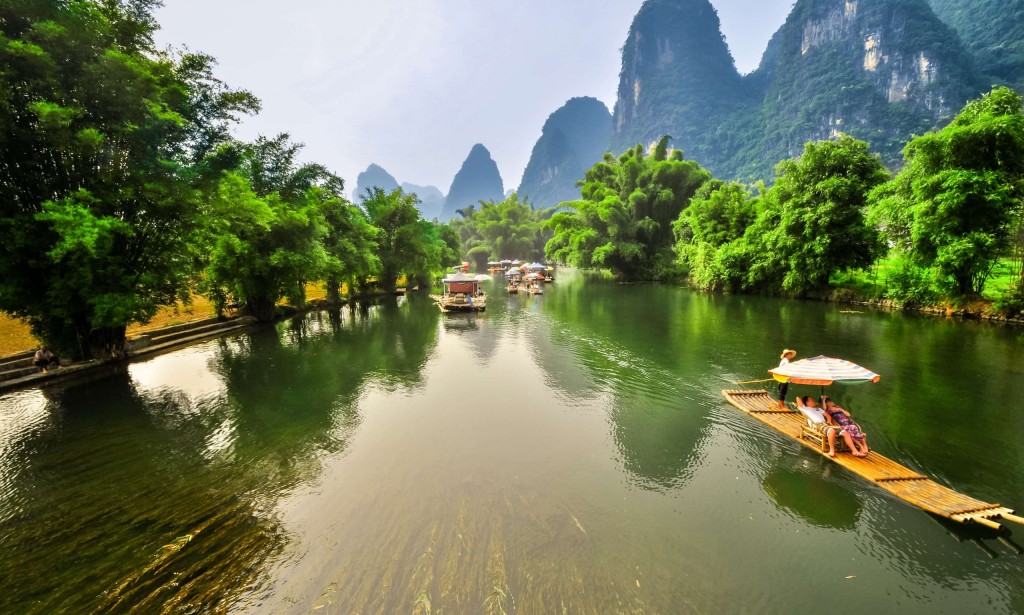

1. The Timeless Allure of Guilin's Landscape
Nestled in the northeast of Guangxi Zhuang Autonomous Region, Guilin has enchanted travelers for centuries with its surreal karst landscape—a masterpiece of nature where jagged limestone peaks pierce the sky, crystal-clear rivers wind through emerald valleys, and ancient caves hide secrets of the earth. Renowned as "the most beautiful scenery under heaven," this UNESCO-listed region blends geological marvels with cultural richness, offering an unforgettable journey through China’s natural and cultural heart. From the meandering Li River to the mist-cloaked mountains, Guilin is a living postcard that transcends seasons, inviting visitors to lose themselves in its poetic beauty.
2. A Scenic Journey Along the Li River: Cruising Through Paradise
2.1 The Iconic Li River Cruise
No trip to Guilin is complete without a cruise along the Li River, a 83-kilometer stretch of water that showcases the region’s crown jewels. Gliding downstream on a traditional bamboo raft or modern boat, travelers are treated to a panorama of towering peaks reflected in glass-like waters, including the iconic Elephant Trunk Hill (Xiangbishan), whose curved rock formation resembles an elephant drinking from the river. The journey reveals timeless rural scenes: terraced rice paddies cling to hillsides, fishermen in narrow boats use cormorants to catch fish—a practice unchanged for millennia—and ancient villages nestle among bamboo groves, offering a glimpse into agrarian life. As the sun sets, the mountains turn golden, and the river shimmers, creating a scene that has inspired poets and painters for generations.
2.2 Cycling the Rural Vistas
For adventurous souls, renting a bicycle to explore the Li River’s banks offers an intimate connection with the landscape. Paths wind through lush orchards and rice fields, passing stone bridges and traditional farmhouses. Stop at villages like Xingping, a 1,700-year-old town where cobblestone streets lead to ancient temples, or Yangshuo, a vibrant hub at the river’s end known for its lively night markets and nearby karst peaks like Moon Hill. The gentle pace allows travelers to absorb the scent of fresh earth, the rustle of bamboo, and the warm smiles of locals, making every pedal stroke a celebration of nature’s tranquility.
3. Majestic Peaks and Serene Caves: Exploring Guilin's Natural Wonders
3.1 Conquering the Mountains for Breathtaking Views
Guilin’s skyline is dominated by hundreds of isolated peaks, each with its own story. Diecai Hill (Folded Brocade Hill), named for its colorful rock layers, offers a moderate climb to Nayun Pavilion on Mingyue Peak, where panoramic views stretch across the city, the Li River, and distant mountains. For a more challenging hike, Yao Mountain, the tallest peak in the area, rewards climbers with sweeping vistas of karst formations carpeted in dense forest—a sight particularly magical at dawn, when mist hovers over the valleys. These peaks are not just geological wonders but also spiritual sites, with ancient temples and pavilions perched on summits, inviting moments of reflection amid nature’s grandeur.
3.2 Venturing into the Earth’s Art Galleries: Guilin’s Caves
Beneath the surface, Guilin’s caves are equally astonishing. Reed Flute Cave (Ludi Yan), nicknamed the "Palace of Natural Arts," dazzles with stalactites and stalagmites shaped over millions of years, illuminated by colorful lights that transform them into surreal sculptures. Inside, the "Crystal Palace" chamber features a 10-meter-high stone pillar said to resemble a dragon, while the "Swan Lake" formation mirrors water so still it’s hard to distinguish from reality. Elsewhere, Seven Star Cave (Qixing Yan) impresses with its vast chambers, underground rivers, and ancient inscriptions, showcasing how these caves have inspired human awe for centuries.
4. Immersing in Guilin's Rich Ethnic Culture
4.1 A Tapestry of Minority Traditions
Guilin is a cultural crossroads, home to ethnic groups like the Zhuang, Yao, Miao, and Dong, whose traditions add depth to the region’s allure. Visit the Zhuang villages in the countryside, where women in vibrant embroidered clothing weave intricate textiles and perform folk dances during festivals like the March Third Song Festival, a celebration of music and romance. In Yao communities, discover the art of batik and the symbolism of their elaborate headdresses, or stay in a Dong stilt house, marveling at their architectural genius—especially the wind-rain bridges, which combine functionality with artistic design. These interactions offer insight into how nature and culture have coevolved in Guilin, with each group preserving traditions shaped by the landscape.
4.2 Savoring Local Flavors
Guilin’s cuisine is a reflection of its diverse heritage, with dishes that marry fresh river ingredients with mountain herbs and spices. Start with the iconic Guilin rice noodles (Guilin mifen), a savory broth topped with tender beef or pork, pickled vegetables, and crispy peanuts—a breakfast staple loved for its hearty flavor. For a taste of the Li River, try beer fish (pijiu yu), a local specialty where fresh carp is cooked in Guilin beer, infused with ginger and chili for a tangy kick. Don’t miss the sweet osmanthus-flavored desserts, like osmanthus jelly or sticky rice cakes, which harness the fragrance of the city’s iconic flower. Each meal in Guilin is a journey through flavors as vivid as the landscape itself.
5. Practical Tips for an Unforgettable Trip
5.1 Best Times to Visit
The ideal seasons for Guilin are spring (March to May) and autumn (September to November), when temperatures are mild, skies are clear, and the landscape blooms with color. In spring, the newly sprouted greenery on the mountains and the blooming flowers along the riverside create a vibrant and fresh scene. Autumn, on the other hand, offers clear and crisp weather, with the leaves on the trees gradually turning various shades of gold and red, adding a warm touch to the karst scenery. Avoid summer crowds and occasional typhoons, while winter offers fewer tourists and a misty, tranquil atmosphere—perfect for photographers seeking moody mountain backdrops. In winter, the soft mist that envelopes the peaks gives the landscape an otherworldly and mysterious charm, making every view seem like a traditional Chinese ink - wash painting.
5.2 Getting There and Around
Guilin Liangjiang International Airport connects to major Chinese cities and international hubs, while high - speed trains from Guangzhou (2.5 hours) and Guizhou (1.5 hours) make it easily accessible. Travelers can catch a direct flight from many international destinations or transfer in major Chinese cities. High - speed trains provide a fast and comfortable way to reach Guilin, allowing passengers to enjoy the passing scenery along the way. Within the city, taxis and Didi (ride - hailing) are convenient, but renting a bike or joining a guided bamboo raft tour allows deeper immersion in the scenery. Cycling through the countryside, you can stop at any time to admire the rice fields, chat with locals, or take a break under the shade of a tree. A bamboo raft tour on the Li River offers a unique perspective, slowly gliding through the water as you're surrounded by the towering karst peaks.
5.3 Respecting Nature and Culture
As you explore, remember to leave no trace—Guilin’s beauty is fragile, and preserving its rivers and mountains ensures future generations can enjoy them. Do not litter, and avoid any activities that might damage the natural environment, such as carving on the rocks. Engage with local communities respectfully, asking permission before photographing villagers or participating in cultural activities, and support sustainable tourism initiatives that protect both the environment and traditional ways of life. By choosing eco - friendly accommodation, buying local handicrafts from ethical sources, and following the guidance of local tour operators who prioritize sustainability, you can contribute to the long - term protection of Guilin's natural and cultural heritage, making your trip not only a personal adventure but also a positive force for the region.
Conclusion: A Journey That Lingers in the Soul
Guilin is more than a destination; it’s a love letter to nature’s artistry. Whether you’re cruising the Li River at dawn, hiking a mist - shrouded peak, or sharing a meal with local ethnic minorities, every moment here is a reminder of the planet’s capacity to inspire and heal. As you depart, the image of those limestone peaks reflected in glassy waters will stay with you—a testament to why Guilin has captivated hearts for centuries, and why it remains a must - visit for any traveler seeking the essence of natural beauty.

You must be logged in to post a comment.