



What’s New
On September 16, 2025, the FDA announced the Virtual Public Meeting and Listening Session on Food Allergen Thresholds and Their Potential Applications
On January 6, 2025, the FDA announced the availability of:
- Final Guidance for Industry: Questions and Answers Regarding Food Allergens, Including the Food Allergen Labeling Requirements of the Federal Food, Drug, and Cosmetic Act (Edition 5). This final guidance will replace both the draft and final guidance documents on food allergen labeling that were issued in November 2022. The new guidance has been updated based on comments submitted to the draft guidance and consists of questions and answers about food allergen labeling requirements, including the labeling of tree nuts, sesame, milk, eggs, incidental additives, highly refined oils, dietary supplement products, and certain specific packing and labeling situations, such as individual units within a multiunit package.
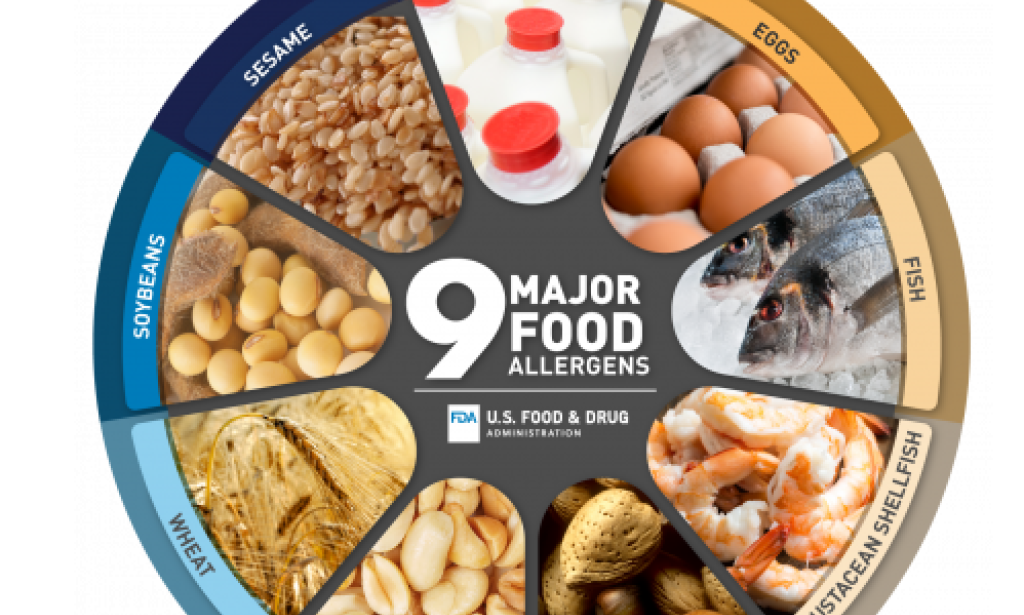
- Final Guidance for FDA Staff and Interested Parties: Evaluating the Public Health Importance of Food Allergens Other Than the Major Food Allergens Listed in the Federal Food, Drug, and Cosmetic Act. The final guidance outlines the approach the FDA generally intends to take when evaluating the public health importance of food allergens that are not one of the nine major food allergens identified by law in the U.S. The major food allergens are milk, eggs, fish, Crustacean shellfish, tree nuts, peanuts, wheat, soybeans, and sesame.
Food allergies and other types of food hypersensitivities affect millions of Americans and their families. Food allergies occur when the body's immune system reacts to certain proteins in food. Food allergic reactions vary in severity from mild symptoms involving hives and lip swelling to severe, life-threatening symptoms, often called anaphylaxis, that may involve fatal respiratory problems and shock. While promising prevention and therapeutic strategies are being developed, food allergies currently cannot be cured. Early recognition and learning how to manage food allergies, including which foods to avoid, are important measures to prevent serious health consequences.
To protect those with food allergies and other food hypersensitivities, the FDA enforces regulations requiring companies to list ingredients on packaged foods and beverages. For certain foods or substances that cause allergies or other hypersensitivity reactions, there are more specific labeling requirements.
The FDA provides guidance to the food industry, consumers, and other stakeholders on best ways to assess and manage allergen hazards in food. The FDA also conducts inspections and sampling to check that major food allergens are properly labeled on products and to determine whether food facilities implement controls to prevent allergen cross-contact (the inadvertent introduction of a major food allergen into a product) and labeling controls to prevent undeclared allergens during manufacturing and packaging. When problems are found, the FDA works with firms to recall products and provide public notification to immediately alert consumers. In addition, the FDA has the authority to seize and remove violative products from the marketplace or refuse entry of imported products.

You must be logged in to post a comment.