



Lin Wu-Tien (pictured) served as the course director of the "Taiwan Equestrian Therapy Center" from 2004. The center, now renamed "Hope Horse Ranch," provides equine therapy services.Image source: Alain Chang
(Deutsche Welle Chinese) 66-year-old Uta Rindfleisch, from Lauingen-Donau, Germany, first came to Taiwan in 1981 to study Chinese. After her second visit in 1985, she decided to stay for love, got married, had children, and started working in Taiwan. Initially, her life was similar to most people's: going to work, taking care of her children, managing household chores, and occasionally meeting with relatives or traveling. Since her family was in Germany, Uta and her family often returned to Germany to visit during summer vacations. Life was busy but fulfilling. However, the birth of her second child—her daughter An-An—in 1990 brought a completely new turning point to her life.
An'an's birth was not smooth. Although she cried loudly when she was born and seemed no different from other newborns, Lin Wutian always felt that the baby's whole body was not only red but also faintly purple. At the time, the doctor only said that the baby needed to be put into an incubator and sent to another floor, but did not mention that An'an might have something wrong with her, nor did he explain why she had to stay in the incubator for several days.
Several days later, after being discharged from the hospital and returning home, Lin Wutian gradually noticed something was wrong: An'an could not control her head properly and had difficulty swallowing; she was old enough to crawl, but still couldn't. The problems became more pronounced after she turned one year old; whenever she had a febrile seizure, she would lose control of her entire body, her mouth would twitch, and she would often have a high fever. This happened repeatedly. However, the hospital never clearly explained why An'an had cerebral palsy and frequently experienced febrile seizures.
As a child, An-An was a beautiful little girl. Due to her German heritage, her features were more defined and delicate than those of the average Taiwanese child, making her resemble a beloved doll. When An-An was four or five years old, the "Heart Road Foundation," founded by parents of children with disabilities, planned to produce a public service announcement and specifically sought out An-An, with her angelic face, hoping she would be the model. However, her role was ultimately replaced by another child—the reason being that An-An's appearance was too normal, too cute, completely contradicting the stereotypes people have about children with disabilities. Years later, when Lin Wu-Tien recounted this story to a DW reporter, her lips still trembled slightly.
Learning driven by maternal love
After doctors diagnosed An-An with cerebral palsy, Lin Wu-Tian actively took her daughter to receive various treatments and resolutely resigned from her stable job as a secretary at the Taipei German School to take on part-time work so that she could have more energy and time to take care of her daughter.
Caring for a child with cerebral palsy requires a combination of early treatment, rehabilitation training, home safety measures to prevent falls and seizures or febrile seizures, and a supportive parenting approach. Therefore, Lin Wutian enrolled An'an in physical therapy and related courses such as hydrotherapy at a very young age.
In 1997, Zhenxing Hospital in Beitou District, Taipei City, opened its first equine therapy workshop. Lin Wutian immediately signed up, devoted herself to learning, and actively collected a large amount of relevant information. From then on, she studied even more diligently and communicated with the hospital's physical therapists to improve her understanding of related medical theories and applications.

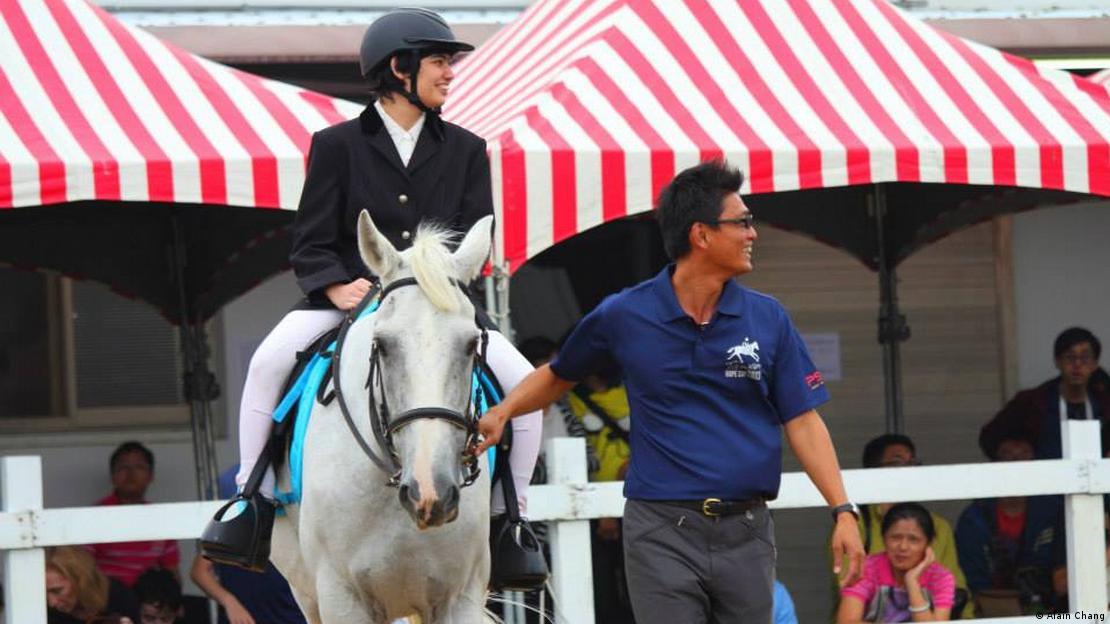
Lin Wutian and Equestrian Therapy
Lin Wutian's upbringing became a significant asset in her entry into the field of equine therapy. Growing up in Germany, she and her sisters frequently rode horses and played, making her already familiar with equestrian sports. Furthermore, Germany is one of the earliest and most developed countries for equine therapy , enabling her to quickly understand and immerse herself in learning related knowledge.
Throughout her journey, Lin Wu-tian diligently studied relevant materials on her own and actively participated in online courses in the United States. She also returned to Germany multiple times to participate in related workshops, continuously refining her skills. Ultimately, she obtained her instructor certification from the North American Riding Association for People with Disabilities (NARHA, now PATH International), becoming the first instructor in Taiwan to receive this certification. After obtaining her instructor certification, Lin Wu-tian became even more dedicated, assisting other people with disabilities and beginning to train and mentor more professionals in equine therapy, striving to promote the development of this therapy in Taiwan.
From Ancient Greece to Modern Times: A European Model for Equestrian Therapy
The origins of equine therapy can be traced back to ancient Greece and Rome. Legend has it that Asclepius, the god of medicine, would place patients on horseback to uplift their spirits and promote recovery. As early as the 5th century BC, the Greeks used horses to assist wounded soldiers in rehabilitation, which can be considered the earliest prototype of equine therapy.
It wasn't until the late 1950s and early 1960s that equine therapy regained importance in Europe and gradually developed into a systematic and modern rehabilitation method. Many European countries actively promoted this therapy, leading to its widespread use today as a professional treatment for people with disabilities.
Liz Hartle: A Pioneer in Equestrian Therapy
One key example of her early inspiration comes from Lis Hartel, a renowned Danish equestrian. In 1944, at the age of 23, she contracted polio, at a time when she was already one of Denmark's most outstanding dressage riders. Despite being paralyzed from the waist down and unable to mount or dismount on her own, she did not give up riding. Instead, she used equestrianism as a rehabilitation tool, gradually returning to the arena.
Ultimately, she won silver medals in equestrian events at both the 1952 Helsinki Olympics and the 1956 Stockholm Olympics (both non-para-Olympics). Her story not only touched the world but also became a classic symbol of the application of equine rehabilitation, earning her the title of "Mother of Equestrian Therapy."
Hartel's story inspired European countries to recognize the potential of equine therapy in the rehabilitation of physical and mental disabilities. Countries like Britain and Norway actively participated, with Germany being the first to establish a systematic model of equine therapy. In 1970, Germany formally established the "German Therapeutic Riding Council" (Das Deutsche Kuratorium für Therapeutisches Reiten eV, DKThR), marking a milestone in the professionalization and institutionalization of equine therapy. Lin Wutian later joined the council as a member.
From Hong Kong to Taiwan: The Introduction and Inspiration of Equestrian Therapy
Physiotherapist Wang Zixuan points out that the introduction of equine therapy to Taiwan is closely related to Hong Kong. Hong Kong was a British colony, and the British introduced equine therapy there early on. Due to the public's enthusiasm for horse racing, Hong Kong has a large number of horses; more importantly, the Hong Kong Jockey Club has long invested its surplus in charity and public welfare, providing the resources and conditions to promote the development of equine therapy. These factors enabled equine therapy to grow rapidly in Hong Kong and became an important model for Taiwan's later development.
Due to frequent exchanges between Taiwan and Hong Kong, the concept of equine therapy gradually took root in Taiwan. However, it wasn't until the late 1990s that Taiwan began to systematically promote this therapy. Subsequently, through collaborations between non-governmental organizations and charitable foundations, the "Taiwan Equestrian Therapy Center" was officially established in 2004, becoming a platform for professional promotion and services. Since then, equine therapy has been gradually applied to the rehabilitation and education of people with disabilities such as cerebral palsy, autism, and developmental delays. Although the promotion process is still limited by resources, space, professional personnel, and horses, its professionalization and social impact have gradually expanded.
The Healing Power of Horseback Riding
Equestrian therapy helps riders learn normal walking patterns and improve posture and balance through the rhythm of a horse's gait and muscle contractions. It is particularly suitable for people with cerebral palsy. The sensory integration stimulation generated during riding not only improves body control but also simulates the rhythm of walking, which is especially effective for people with physical disabilities. Furthermore, children with autism can stabilize their nervous system through horseback riding and learn social skills through interaction with horses. Lin Wu-tian emphasizes that equine therapy is not limited to activities on horseback. The process of interacting with horses—such as feeding, grooming, and cleaning the stables—can also improve hand muscle dexterity and has a therapeutic effect on the mind.
In an interview with DW, physical therapist Wang Zixuan pointed out that equine therapy in Taiwan is currently mainly used for cases of autism, attention deficit hyperactivity disorder (ADHD), cerebral palsy, limb disorders, developmental delays, and other sensory integration dysfunctions. Because each case is different, there is no fixed pattern for training methods and steps; adjustments must be made flexibly based on the actual response.

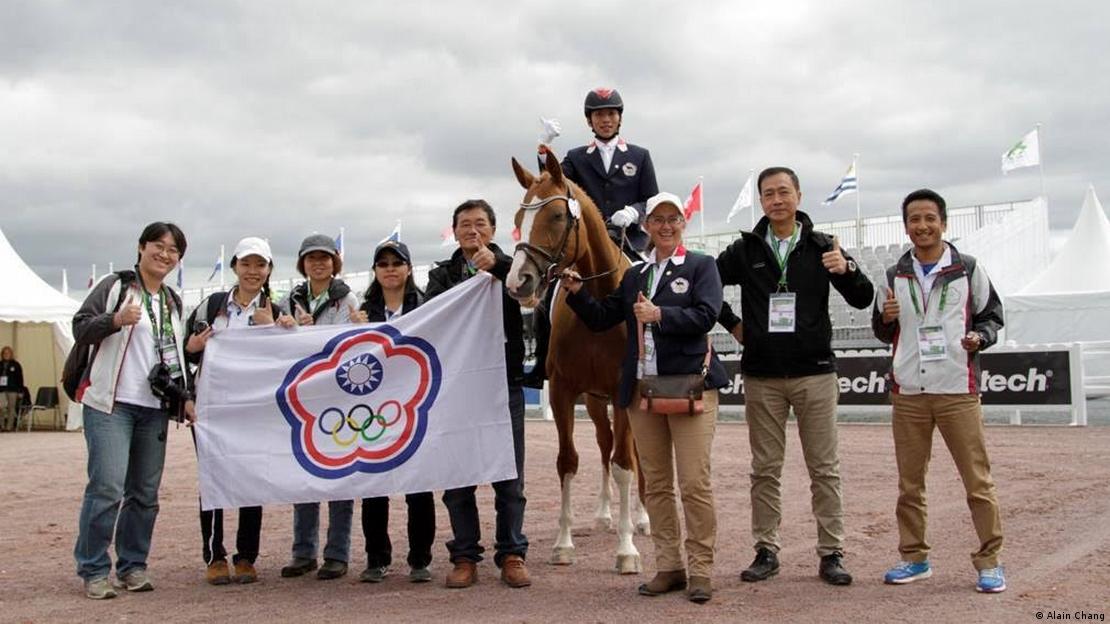
From Companionship to the International Stage: The Story of Sun Yuren
In 2014, Sun Yu-ren, a 25-year-old man with congenital cerebral palsy and limb disabilities, represented Taiwan in the Para Equestrian event at the 2014 FEI World Equestrian Games in Caen, Normandy, France. He achieved a commendable 13th place. Although he did not win a medal, he was the first Taiwanese athlete to qualify for the event, making his achievement all the more significant.
It's worth mentioning that Sun Yu-jen began receiving equestrian rehabilitation instruction from Lin Wu-tien in his second year of junior high school. This long-term companionship and training has witnessed the important journey of equine therapy in Taiwan from its infancy to its emergence on the international stage. Lin Wu-tien was the leader of the Taiwan delegation in 2014.
Since 2004, Lin Wu-Tien has served as the course director of the "Taiwan Equestrian Therapy Center". The center, now renamed "Hope Horse Farm" and affiliated with the "Fang Hsing Chung Equestrian Education and Health Social Welfare Foundation", provides equine therapy services to more than 2,000 students annually.
For her long-term promotion of equine therapy and outstanding contributions, Lin Wu-tian was awarded the "Sports Promoter Award" by the Sports Administration of the Ministry of Education in 2021 in recognition of her dedication to the field of sports and rehabilitation.
Taiwan Goes Global: From Participation to Hosting
The Federation of Horses in Education and Therapy International (HETI) holds an international symposium every three years. In 2009, the conference was held in Münster, Germany, attracting approximately 800 delegates from around the world. Lin Wutian was elected to the council at this annual meeting, becoming the organization's first council member from Asia.
HETI has twice held coach certification exams in Taiwan, and Lin Wu-Tien was one of the key figures behind this initiative. Through her tireless efforts, HETI chose Taiwan as the venue for its 2015 annual meeting, attracting over 130 global delegates. Lin Wu-Tien has played a crucial role in enhancing Taiwan's international visibility and promoting international participation.
Riding on horseback: More than just treatment, it's about taking control of your life.
Why choose horses as therapy partners instead of more common cats or dogs? Lin Wutian explained that different animals play different roles in therapy. Wang Zixuan added that while cats and dogs can help children with disabilities learn social skills and communication, different animals have different psychological and physical stimuli for children. Therefore, therapy should be flexibly applied based on the characteristics of both the animal and the child. Even animals of the same breed have unique personalities and traits; finding the most suitable combination is the key to success.
The most distinctive feature of equine therapy is that "horses can be ridden." Wang Zixuan further explained that many children with disabilities rely on wheelchairs for mobility and are pushed by others, making it difficult for them to control their direction; however, when they ride a horse, they can personally control the horse and take themselves to where they want to go. This process not only rebuilds their self-confidence but also allows children to regain control over certain moments in their lives and enjoy a moment of genuine freedom.
For these children, sitting in wheelchairs, they are used to looking up at others; but when they ride on horseback, their field of vision widens, and they can even look down at their surroundings. At that moment, it is not just a change in height, but also a symbol of the power to "stand up" again.

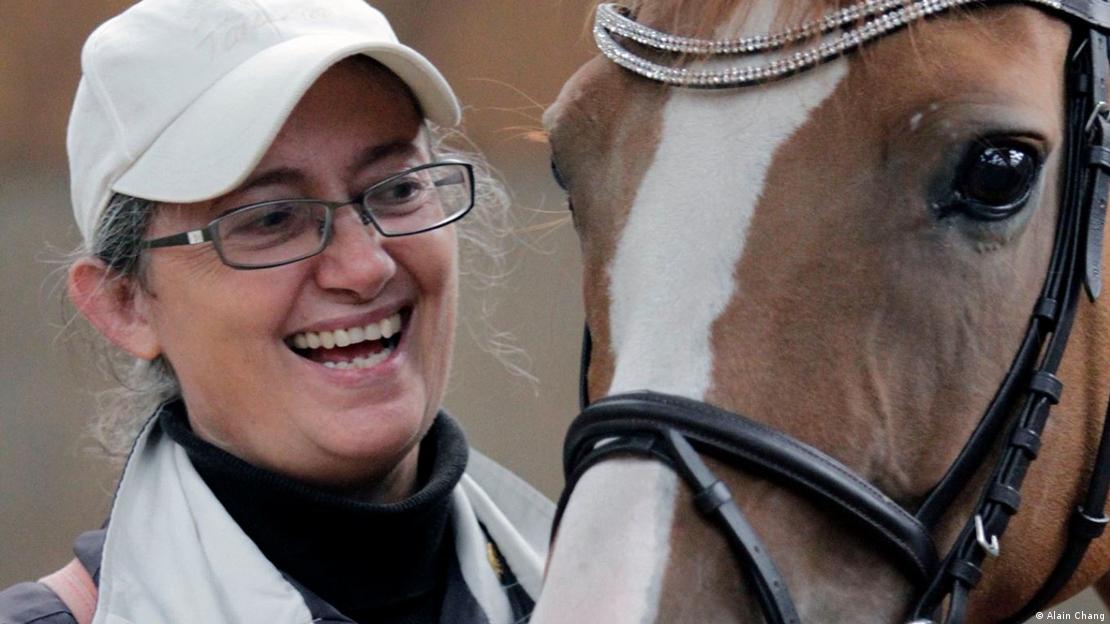
Challenges of contemporary equine therapy
Most of the horses in modern Taiwan are imported, primarily from Japan, Europe, the United States, and New Zealand and Australia. Of course, some people also breed and raise horses locally. Currently, there are about 2,000 horses in Taiwan, but most are used for leisure and recreation.
Equestrian therapy faces multiple limitations in its promotion: the number of horses is limited, there is a shortage of qualified instructors, and most venues are located in central and southern Taiwan or suburbs, making them inconvenient for families in northern Taiwan or urban areas. In addition, the cost of equestrian therapy is relatively high and is not covered by health insurance, making it difficult for many ordinary families to afford it long-term.
Speechless, I ask the heavens.
Lin Wu-Tien was not the first to introduce equine therapy to Taiwan, but her contribution lay in promoting its professionalization and institutionalization. She stated her desire to be a pioneer in promoting "more professional" practices and to dedicate herself to improving the quality of treatment. Even with limited resources, she persisted in promoting this therapy, which is extremely helpful for people with disabilities.
As for An'an's future? When asked by a DW reporter, Lin Wutian was silent for a moment before finally saying softly, "Her father only hopes to live longer than An'an so he can take care of her." After speaking, she fell into deep thought again, and the scene fell silent.
Wang Zixuan added that although there are many shelters to choose from in Taiwan, the conditions and quality of care vary, and not every parent can truly feel at ease.

You must be logged in to post a comment.