



On election day, Hong Kong Chief Executive John Lee met with the media and reiterated his call for "all eligible voters in Hong Kong to cast their crucial votes and elect capable and ambitious Legislative Council members."Image source: Chan Long Hei/AP Photo/picture alliance
(Deutsche Welle Chinese) On Sunday (December 7), nearly one-third of Hong Kong's registered voters cast their ballots to elect a new Legislative Council.
This is the second Legislative Council election since the Standing Committee of the National People's Congress of China amended the Hong Kong electoral system in March 2021 to ensure the principle of "Hong Kong people governing Hong Kong with patriots as the mainstay."
In this Legislative Council election, there were a total of 615 general polling stations throughout Hong Kong, with a total voting time of 16 hours, two hours longer than the previous election.
According to official data, the voter turnout for the direct elections was 31.90%, exceeding the 30.20% total turnout for the previous election; a total of 1,317,682 people voted, a difference of over 30,000 compared to the 1,350,680 in the previous election. However, this is still far below the levels that often exceeded 50% before Hong Kong's electoral reforms. While this saved the government from embarrassment due to the shadow of the Tai Po Hung Fuk Court fire, it failed to provide a clear endorsement for the "patriots governing Hong Kong" electoral reforms in the Legislative Council.
A week before the election, the worst fire in Hong Kong in decades occurred at Wong Fook Court in Tai Po, which has claimed at least 159 lives.

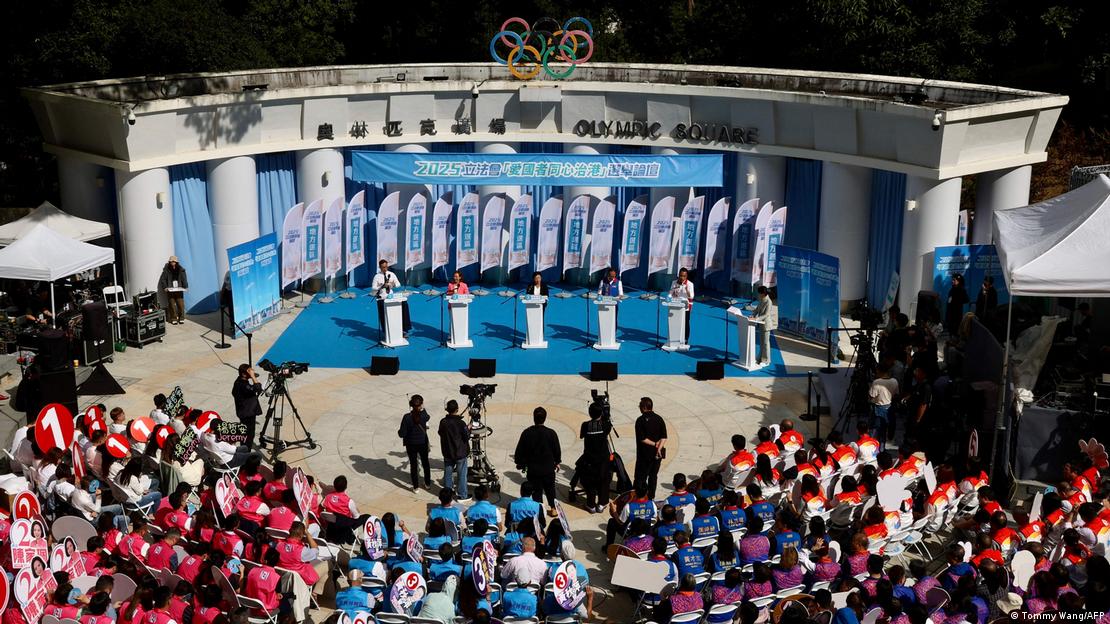
Hong Kong's Independent Commission Against Corruption (ICAC) arrested four men on election day.
All campaign activities were suspended after the fire. The city was filled with mourning, and the government arrested and intimidated those responsible, creating a somber and oppressive atmosphere.
Amid the shadow of the fires and public discontent, analysts had previously anticipated that the vote, conducted under heavy police presence, might result in low turnout.
On Sunday, Hong Kong Chief Executive John Lee wrote on Facebook that he and his wife, Lee Lam Lai-chan, went to the polling station at Bishop's College, Robinson Road, Hong Kong Island West constituency early in the morning to vote, fulfilling their civic duty. Later, in a media briefing, he reiterated his appeal to all eligible voters in Hong Kong to cast their crucial votes and elect capable and ambitious Legislative Council members. He said the fire at Hung Fook Court in Tai Po was deeply saddening, and the government was making every effort to handle the aftermath, investigate the truth, and promote systemic reforms to prevent a recurrence of such a tragedy.

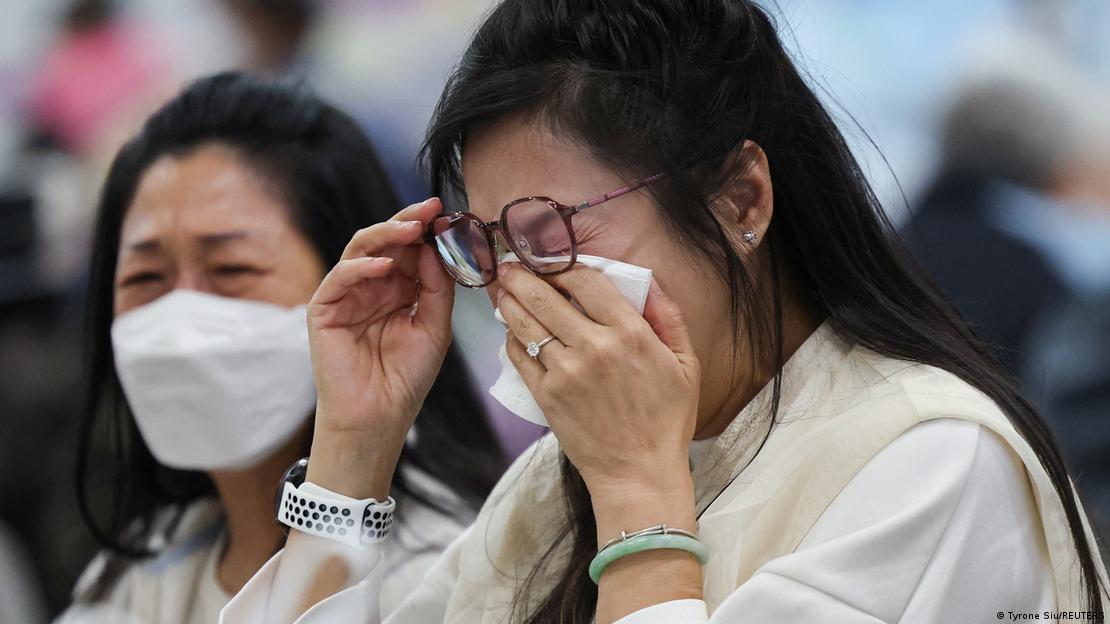
Last week, John Lee announced that he would establish an "independent commission led by a judge" to investigate the cause of the fire.
Since the fire, police have arrested 15 people from the construction company involved in the project on suspicion of manslaughter.
Media reports and online discussions have raised issues such as holding the government accountable and investigating corruption. On the fourth day after the disaster, the Office for Safeguarding National Security of the Central People's Government in Hong Kong issued a statement claiming that "hostile foreign forces and anti-China elements are taking advantage of the disaster to stir up trouble and create chaos." Within days, the Hong Kong National Security Department arrested three people on suspicion of "incitement," including Miles Kwan, founder of the "Tai Po Hung Fook Court Fire Concern Group" and a university student who initiated the "Four Demands" petition and called for an independent investigation; former Tuen Mun District Councillor Cheung Kam-hung; and a female volunteer from Tai Po.
According to reports, on election day, Hong Kong's Independent Commission Against Corruption (ICAC) arrested four men for allegedly posting messages on social media platforms inciting others not to vote or to cast invalid votes, violating the Election Fraud and Illegal Conduct Ordinance. The ICAC stated that a total of 11 people have been arrested during this election period, and three of them have been charged.
In addition, the Hong Kong Independent Commission Against Corruption (ICAC) stated that it obtained a warrant from a magistrate on the same day for the arrest of a 24-year-old man, who was suspected of leaving comments on social media platforms to incite others not to vote.
Previously, police had also made arrests on suspicion of criminal damage in connection with the tearing down of some election posters.
Hong Kong Journalists Association: The Office for Safeguarding National Security in Hong Kong summoned media outlets, creating a chilling effect.
In this Hong Kong Legislative Council election , a total of 161 candidates are vying for 90 seats, including 20 seats in the geographical constituency, 60 seats in the functional constituency, and 40 seats in the Election Committee constituency. All candidates have been approved by the Candidates' Credentials Committee to ensure that they are "patriotic and love Hong Kong".
The day before the election, the Office for Safeguarding National Security of the Central People's Government in Hong Kong summoned officials and journalists from several foreign media outlets stationed in Hong Kong, accusing some media outlets of spreading false information and smearing the government's work in their reporting on the recent tragic fire at Hung Fook Court and the upcoming Hong Kong Legislative Council elections. A notice on the Office's website urged foreign journalists to "take care of themselves, behave themselves, and not cross the legal red line."
According to a report by the British newspaper The Guardian, foreign media outlets that were summoned for questioning included AFP and The New York Times.
The Hong Kong Journalists Association responded that the Office for Safeguarding National Security of the Central People's Government in the Hong Kong Special Administrative Region (HKSAR) intended to use national security as a pretext to influence overseas media coverage of Hong Kong issues. The Association stated that the Office accused relevant media outlets of spreading false information and distorting and smearing the government's disaster relief efforts and election affairs, but failed to provide concrete examples or supporting evidence. "Such baseless accusations create a chilling effect, hinder the media from fulfilling its oversight responsibilities, and are detrimental to the entire news industry and Hong Kong's international image in every way."

You must be logged in to post a comment.