


1. The Science of Fat Loss: What You Need to Know First
Before diving into strategies, it’s critical to grasp the basic science of fat loss. At its core, fat loss boils down to one key principle: creating a caloric deficit. This means burning more calories than you consume. When your body doesn’t get enough energy from food, it turns to stored fat for fuel, breaking down fat cells to release energy. But here’s the catch—creating a deficit the wrong way (like starving yourself) can slow your metabolism, lose muscle mass, and lead to rebound weight gain. The goal is to create a moderate, sustainable deficit that prioritizes fat loss while preserving muscle.
Another key point: muscle mass plays a huge role in fat loss. Muscle is metabolically active tissue, meaning it burns more calories at rest than fat. Losing muscle during减脂 slows your resting metabolic rate (RMR), making it harder to keep the weight off. That’s why scientific fat loss focuses on preserving or even building muscle while cutting calories.
2. Diet Strategies: Eat Smart, Not Less
Diet is the foundation of fat loss—you can’t out-train a bad diet. But that doesn’t mean you have to eat boring, tasteless food. The key is to choose nutrient-dense foods that keep you full, fuel your body, and support your deficit. Here’s how to structure your diet:
2.1 Calculate Your Target Calories (Moderate Deficit)
First, find your Total Daily Energy Expenditure (TDEE)—the number of calories you burn in a day, including activity. Use a TDEE calculator (input your age, gender, weight, height, and activity level) to get this number. Then, create a deficit of 300-500 calories per day. This is the sweet spot: it leads to 0.5-1 pound of fat loss per week (a healthy, sustainable rate) and minimizes muscle loss.
For example, if your TDEE is 2,000 calories, aim for 1,500-1,700 calories per day. Avoid deficits larger than 500 calories unless supervised by a professional—they increase the risk of muscle loss, nutrient deficiencies, and fatigue.
2.2 Prioritize Protein: Preserve Muscle, Stay Full
Protein is the most important macronutrient for fat loss. It keeps you feeling full longer (reducing cravings), boosts your metabolism (via thermogenesis, the energy used to digest food), and preserves muscle mass during a deficit. Aim for 1.6-2.2 grams of protein per kilogram of body weight daily.
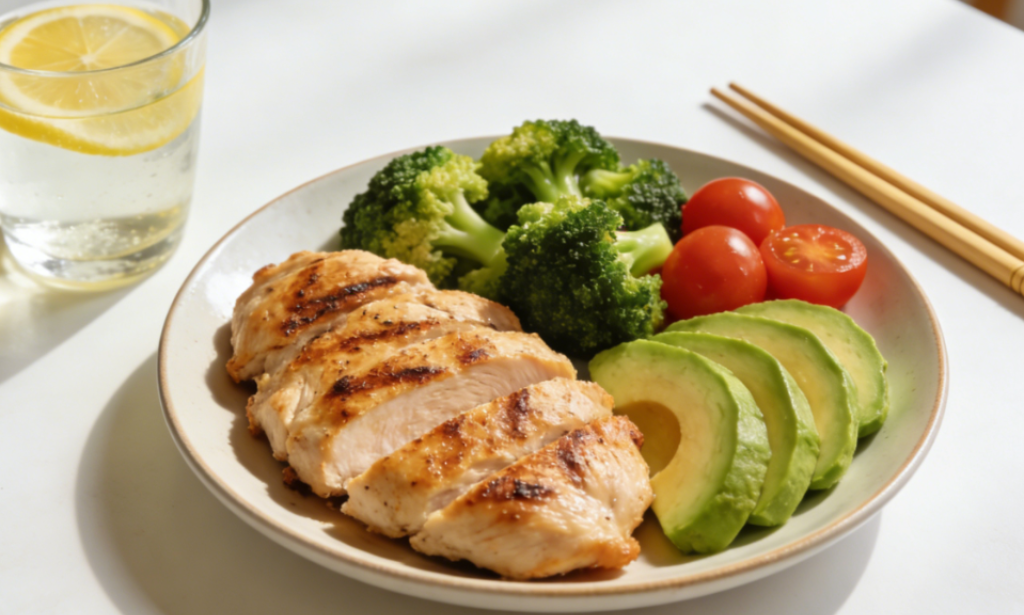
Good sources include: chicken breast, turkey, fish (salmon, tuna), eggs, Greek yogurt, tofu, lentils, and protein powder (whey or plant-based). Spread protein intake evenly across meals—e.g., 20-30 grams per meal—to keep muscle protein synthesis (the process of building muscle) steady.
2.3 Choose the Right Carbs and Fats
Carbs and fats often get a bad rap in fat loss, but they’re essential for energy and hormone health. The key is to pick high-quality, unprocessed options.
For carbs: Focus on complex carbs that digest slowly, providing steady energy. Aim for 2-4 grams per kilogram of body weight daily (adjust based on activity level—more if you train heavily). Good sources: oats, quinoa, brown rice, sweet potatoes, fruits (berries, apples), and vegetables (spinach, broccoli, peppers). Avoid refined carbs (white bread, pastries, sugary cereals) which cause blood sugar spikes and crashes.
For fats: Opt for healthy fats that support hormone production (critical for metabolism and satiety). Aim for 0.8-1 gram per kilogram of body weight daily. Good sources: avocados, nuts (almonds, walnuts), seeds (chia, flax), olive oil, and fatty fish. Limit saturated and trans fats (fried foods, processed snacks) as they contribute to inflammation and hunger.
2.4 Eat More Fiber and Hydrate
Fiber is a game-changer for satiety. It adds volume to your meals without extra calories, keeping you full longer. Aim for 25-30 grams of fiber per day from vegetables, fruits, whole grains, and legumes.
Hydration is also key. Sometimes thirst is mistaken for hunger. Drink 3-4 liters of water daily. Studies show that drinking water before meals can reduce calorie intake by 13%. You can also add lemon or cucumber for flavor, or sip on herbal tea.
3. Exercise Strategies: Burn Calories, Preserve Muscle
While diet creates the deficit, exercise accelerates fat loss and preserves muscle. The best fat loss workout plan combines two types of training: resistance training and cardio. Here’s how to structure it:
3.1 Resistance Training: The Non-Negotiable for Muscle Preservation
Resistance training (weightlifting, bodyweight exercises) is the most important exercise for fat loss. It builds and preserves muscle, which keeps your metabolism high. Aim to train 3-4 times per week, targeting all major muscle groups (legs, chest, back, shoulders, core).
Focus on compound movements—multi-joint exercises that work multiple muscle groups at once. Examples: squats, deadlifts, push-ups, pull-ups, rows, and overhead presses. These exercises burn more calories during the workout and boost your metabolism for hours afterward (the “afterburn effect”).
Rep ranges and sets: For muscle preservation, do 3-4 sets of 8-12 reps per exercise. Gradually increase weight or reps (progressive overload) to keep challenging your muscles.
3.2 Cardio: Choose Efficient, Sustainable Types
Cardio burns calories, but not all cardio is created equal. The goal is to choose cardio that doesn’t burn too many muscle calories or leave you exhausted.
Option 1: Steady-State Cardio (SSC). This is low-to-moderate intensity, like brisk walking, jogging, cycling, or swimming. Do 20-30 minutes 2-3 times per week. It’s easy on the body and sustainable for long periods.
Option 2: High-Intensity Interval Training (HIIT). This involves short bursts of intense exercise (e.g., sprinting) followed by rest periods. HIIT burns a lot of calories in a short time (15-20 minutes) and has a strong afterburn effect. Do 1-2 times per week, as it’s more demanding. Example: 30 seconds of sprinting, 1 minute of walking, repeated 8-10 times.
Pro tip: Do cardio after resistance training or on separate days. Doing cardio first can fatigue your muscles, reducing the effectiveness of weightlifting.
4. Lifestyle Habits: The Unsung Heroes of Fat Loss
Many people overlook lifestyle habits, but they’re just as important as diet and exercise for sustainable fat loss. Here are three key habits to focus on:
4.1 Get Enough Sleep
Sleep deprivation kills fat loss progress. When you don’t sleep (7-9 hours per night), your body releases more ghrelin (the hunger hormone) and less leptin (the fullness hormone), increasing cravings for sugary, high-calorie foods. It also raises cortisol (the stress hormone), which promotes fat storage—especially around the belly.
To improve sleep: Stick to a consistent sleep schedule (even on weekends), avoid screens 1 hour before bed (blue light disrupts sleep), keep your bedroom dark and cool, and avoid caffeine after 2 PM.
4.2 Manage Stress
Chronic stress raises cortisol levels, which as mentioned, promotes fat storage. It also leads to emotional eating—turning to food for comfort. Find healthy ways to manage stress: meditation, deep breathing, yoga, walking in nature, or spending time with friends. Even 10 minutes of daily stress relief can make a big difference.
4.3 Track Progress (Beyond the Scale)
The scale is a useful tool, but it doesn’t tell the whole story. Muscle is denser than fat, so as you build muscle and lose fat, your weight might stay the same or even increase—but your body composition will improve (you’ll look leaner).
Track progress with: Measurements (waist, hips, thighs), progress photos (taken monthly in the same lighting/clothes), how your clothes fit (do jeans feel looser?), and energy levels (are you less tired?). Weigh yourself once a week (same time/day) and take the average—daily fluctuations are normal and not a sign of failure.
5. Avoid These Common Fat Loss Mistakes
Even with the best intentions, mistakes can derail your progress. Here are the most common ones to avoid:
• Extreme Calorie Cutting: Eating too few calories (below 1,200 for women, 1,500 for men) slows your metabolism and leads to muscle loss. It’s unsustainable and often results in binge eating.
• Cutting Out Entire Food Groups: Eliminating carbs or fats entirely is unnecessary and unhealthy. Carbs fuel your workouts, and fats support hormone health. A balanced diet is key.
• Doing Too Much Cardio: Endless cardio burns muscle and leaves you exhausted. Combine it with resistance training for the best results.
• Not Planning Meals: Without a plan, you’re more likely to reach for unhealthy, convenient foods. Take 10 minutes weekly to meal prep or plan your meals.
• Expecting Quick Results: Fat loss takes time. Aim for 0.5-1 pound per week—this is the rate that’s most sustainable long-term. Don’t give up if you don’t see changes in a week or two.
Final Thoughts: Fat Loss Is a Lifestyle, Not a Diet
The most important thing to remember about scientific fat loss is that it’s a lifestyle change, not a temporary diet. Crash diets and extreme workouts might give you quick results, but they’re impossible to maintain long-term. Instead, focus on building habits you can stick to: eating nutrient-dense foods, lifting weights regularly, getting enough sleep, and managing stress.
Be patient with yourself. Progress won’t always be linear—there will be weeks where the scale doesn’t move, and that’s okay. What matters is consistency. Celebrate small wins: fitting into an old pair of jeans, lifting a heavier weight, or having more energy throughout the day.
If you’re just starting out, don’t try to change everything at once. Pick one or two habits to focus on (e.g., increasing protein intake, doing 3 resistance workouts per week) and build from there. Over time, these small changes will add up to big results.
What’s your biggest challenge when it comes to fat loss? Let me know in the comments below—I’d love to help!

You must be logged in to post a comment.