

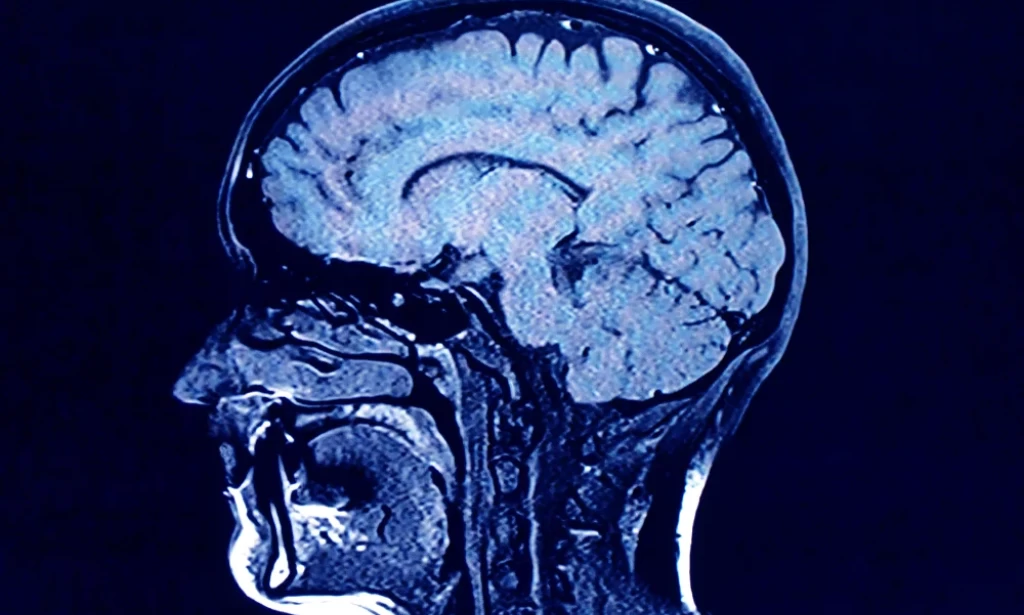

As we age, the human brain rewires itself.
The process happens in distinct phases, or “epochs,” according to new research, as the structure of our neural networks changes and our brains reconfigure how we think and process information.
For the first time, scientists say they’ve identified four distinct turning points between those phases in an average brain: at ages 9, 32, 66 and 83. During each epoch between those years, our brains show markedly different characteristics in brain architecture, they say.
The findings, published Tuesday in the journal Nature Communications, suggest that human cognition does not simply increase with age until a peak, then decline. In fact, the phase from ages 9 to 32 is the only time in life when our neural networks are becoming increasingly efficient, according to the research.
During the adulthood phase, from 32 to 66, the average person’s brain architecture essentially stabilizes without major changes, at a time when researchers think people are generally plateauing in intelligence and personality.
And in the years after the last turning point — 83 and beyond — the brain becomes increasingly reliant on individual regions as connections between them begin to wither away.
“It’s not a linear progression,” said Alexa Mousley, a postdoctoral researcher associate at the University of Cambridge, who is the study’s lead author. “This is the first step of understanding the way the brain’s changing fluctuates based on age.”
The findings could help identify why mental health and neurological conditions develop during particular phases of rewiring.
Rick Betzel, an associate professor of neuroscience at the University of Minnesota who was not involved in the research, said the findings are intriguing, but more data is needed to support the conclusions. The theories may not hold up to scrutiny over time, he said.
“They did this really ambitious thing,” Betzel said of the study. “Let’s see where it stands in a few years.”
For their research, Mousley and her colleagues analyzed MRI diffusion scans — which are essentially images of how water molecules move within the brain — from about 3,800 people from newborns to age 90. The goal was to map the neural connections across the average person’s brain at different stages in life.
In the brain, the bundles of nerve fibers that transfer signals are encapsulated in fatty tissue called myelin. Think of it like wiring or plumbing. Water molecules diffused in the brain tend to move in the direction of these fibers, rather than across them, meaning researchers can infer where the neural pathways are located.
“We can’t crack open skulls … we rely on non-invasive approaches,” Betzel said of this type of neuroscience research. “What we’re trying to figure out is where these fiber bundles are at.”
Based on the MRI scans, the new study maps the neural network of an average person across a lifespan, determining where connections are strengthening or weakening. The five “epochs” it describes are based on the neural connections the researchers observed.
The first phase is up to age 9, they suggest. The brain rapidly increases in gray and white matter; it prunes extra synapses and restructures itself.

You must be logged in to post a comment.