

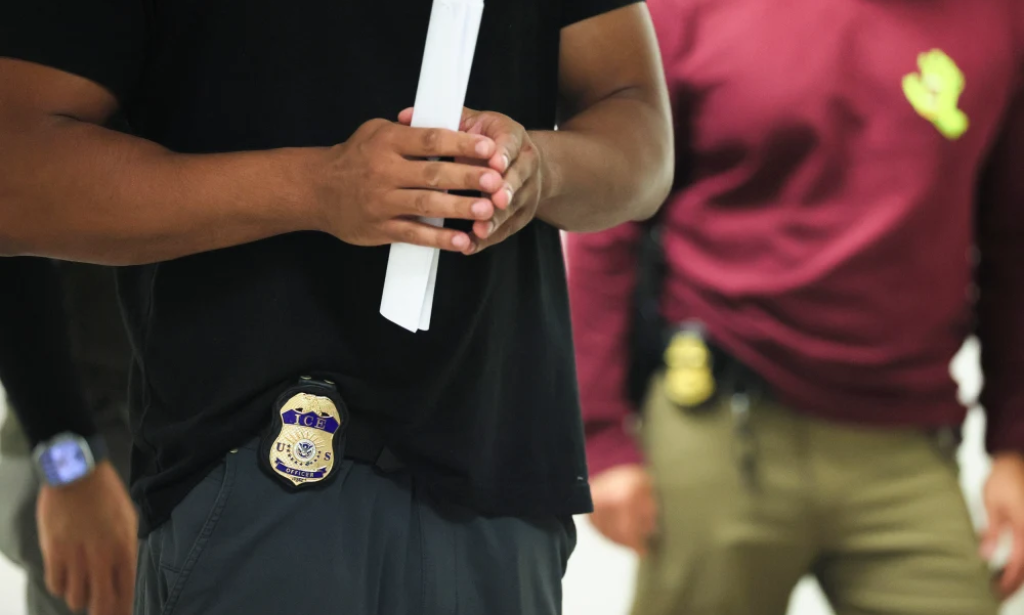

The creator behind ICEBlock, an app that tracked immigration enforcement officials’ activities, is suing the Trump administration two months after his app was removed from the Apple app store following criticism from officials.
After ICEBlock soared in popularity earlier this year, the Trump administration accused the app, which allowed users to share real-time sightings of Immigration and Customs Enforcement agents in their area, of putting agents at risk. In October, Apple announced that it had removed ICEBlock and other apps like it from its app store, citing information they had “received from law enforcement about the safety risks associated with ICEBlock.”
On Monday, Joshua Aaron, ICEBlock’s Texas-based developer, filed a lawsuit against several Trump administration officials alleging they successfully pressured Apple to remove the app.
The lawsuit, filed in the U.S. District Court for the District of Columbia, accuses Attorney General Pam Bondi, Department of Homeland Security Secretary Kristi Noem, ICE’s acting Director Todd Lyons and White House border czar Tom Homan of making “unconstitutional threats and demands against Apple” in violation of the First Amendment.
“For what appears to be the first time in Apple’s nearly fifty-year history, Apple removed a U.S.-based app in response to the U.S. government’s demands,” the complaint states.
The White House and DOJ declined to comment. ICE did not immediately respond to requests for comment. Apple, which is not a defendant in the lawsuit, did not immediately respond to a request for comment.
Tricia McLaughlin, the DHS' assistant secretary for public affairs, said in an email statement that ICE tracking apps "put the lives of the men and women of law enforcement in danger," adding that the agents are facing "more than a 1150% increase in assaults against them and an 8000% increase in death threats."
“But, of course, the media spins this correct decision for Apple to remove these apps as them caving to pressure instead of preventing further bloodshed and stopping law enforcement from getting killed," McLaughlin wrote.
Since the app store was launched in 2008, Apple has sometimes pulled products, such as a platform that allowed protesters to track police activity in Hong Kong and a slew of VPN services in Russia, in the wake of government backlash or at the request of state officials. But the tech giant’s transparency reports have never recorded the company complying with government-demanded takedowns in the United States.

You must be logged in to post a comment.