



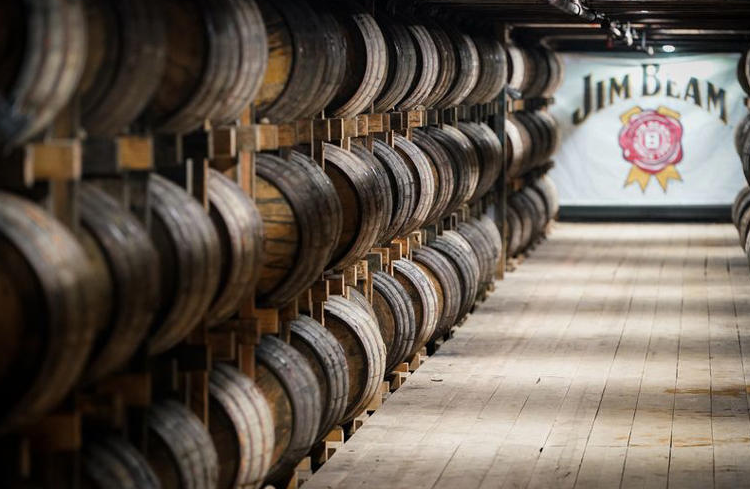
Bottling and warehousing operations will continue. A statement from the company said, “We are always assessing production levels to best meet consumer demand, and recently met with our team to discuss our volumes for 2026.
“We’ve shared with our teams that while we will continue to distill at our (Freddie Booker Noe) craft distillery in Clermont and at our larger Booker Noe distillery in Boston, we plan to pause distillation at our main distillery on the James B. Beam campus for 2026 while we take the opportunity to invest in site enhancements.
• Trump blames rising unemployment on mass firings of government workers
• Donald Trump ridiculed as he rattles off his 'MAGA math' live on air
“Our visitor center at the James B. Beam campus remains open so visitors can have the full James B. Beam experience and join us for a meal at The Kitchen Table.”
Kentucky’s $9 billion bourbon industry has been struggling amid a recent drop in demand. To counteract this, production of the whiskey has been pulled back to the lowest level since 2018.
According to the industry group Distilled Spirits Council of the United States, U.S. spirits exports fell by 85 percent, to below $10 million in the second quarter of 2025. President and CEO Chris Swonger blamed this on “persistent trade tensions.”
Trump’s recent trade war with Canada and other countries has also had a knock-on effect on the industry. Canada has been boycotting American spirits since March due to Trump’s tariffs, and American whiskey sales to the country have declined by more than 60% in recent months.
Competitors such as Jack Daniel’s Tennessee Whiskey maker Brown-Forman have also been affected, announcing layoffs or shorter production pauses earlier in 2025.
Earlier this week, the office of Canadian Prime Minister Mark Carney said that Canada and the U.S. will launch formal discussions to review their free trade agreement in mid-January.
Thirty-six U.S. states rely on Canada as their top export destination, with nearly $3.6 billion Canadian (approximately $ 2.7 billion) worth of goods and services crossing the border each day.
Trump’s trade wars have impacted numerous industries throughout the year, including agriculture, particularly affecting farmers. In early December, the president announced a $12 billion farm aid package to boost farmers who have struggled to sell their crops while getting hit by rising costs after the president raised tariffs on China.
The aid package was the administration’s latest effort to defend Trump’s economic stewardship and answer voter angst about rising costs.

You must be logged in to post a comment.