


AI Becomes a “System-Level Capability”
Walking into the CES exhibition halls, one clear change stands out: discussions around AI are no longer centered on model size, computing power metrics, or technical route debates. Instead, the focus has shifted to what AI can do, how it can be embedded into existing systems, and how it can be deployed at scale.
Large models remain the foundation, but they are no longer the centerpiece of exhibition booths. In their place are large numbers of fully operational AI devices and system solutions. AI agents with autonomous decision-making capabilities, physical AI systems that can interact with the real world, and AI factories for enterprises and industries have become the main highlights.
In conversations with many exhibitors, reporters found that companies no longer repeatedly emphasize model parameters or computing scale, but instead directly demonstrate how AI is embedded into devices, systems, and real-world scenarios. AI is becoming a default underlying capability of products, rather than a standalone technical selling point.
In the personal device area, many manufacturers showcased computers, smart glasses, and wearable devices with on-device AI processing capabilities. In the automotive zone, AI has been integrated into the entire vehicle electronic architecture, forming a unified system from cockpit interaction to assisted driving. In industrial scenarios, AI is applied to production systems and management platforms for production scheduling, quality inspection, and equipment maintenance.
Overall, CES is shifting from a “cutting-edge technology show” to an “industrial deployment test field.” AI is being deeply integrated into operating systems, vehicle platforms, and industrial control systems, becoming a foundational capability that is reshaping product forms and industrial processes.
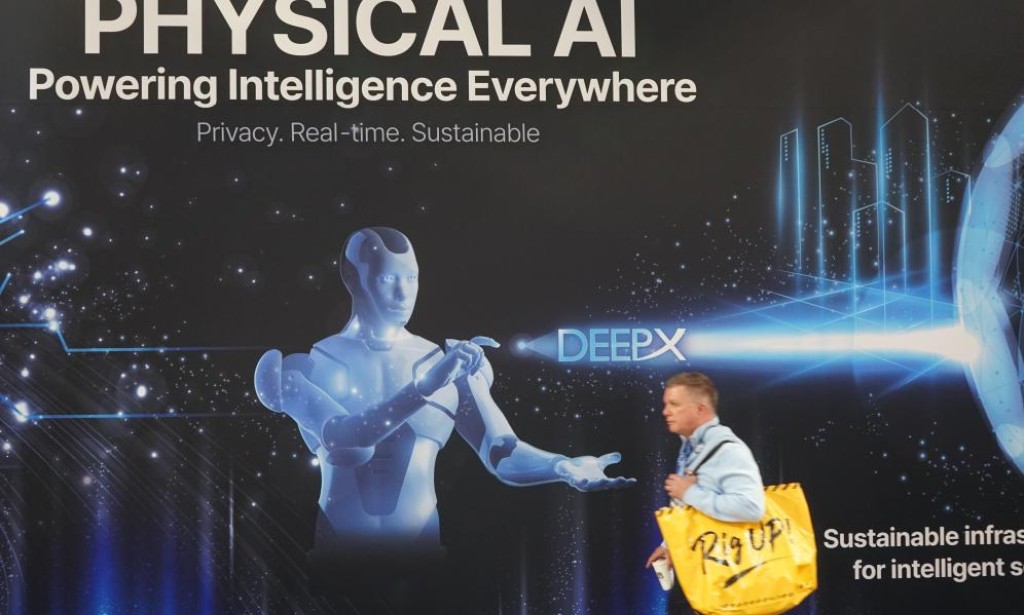
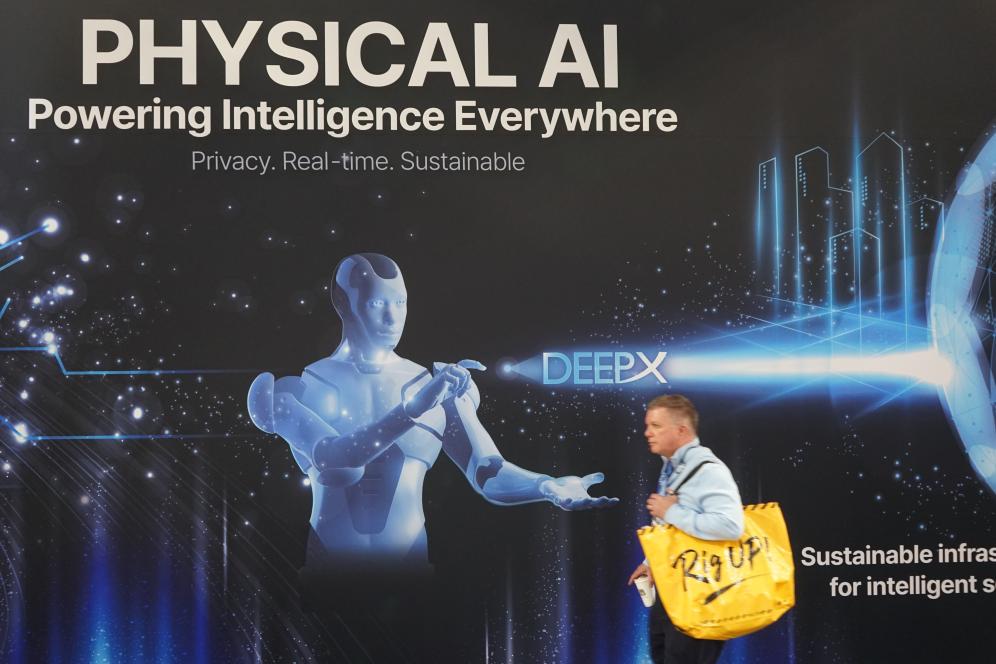
On January 7, 2026, a man walks past a booth labeled “Physical AI” at the 2026 Consumer Electronics Show in Las Vegas, United States. (Xinhua Photo by Zeng Hui)
Physical AI Accelerates Breakthroughs
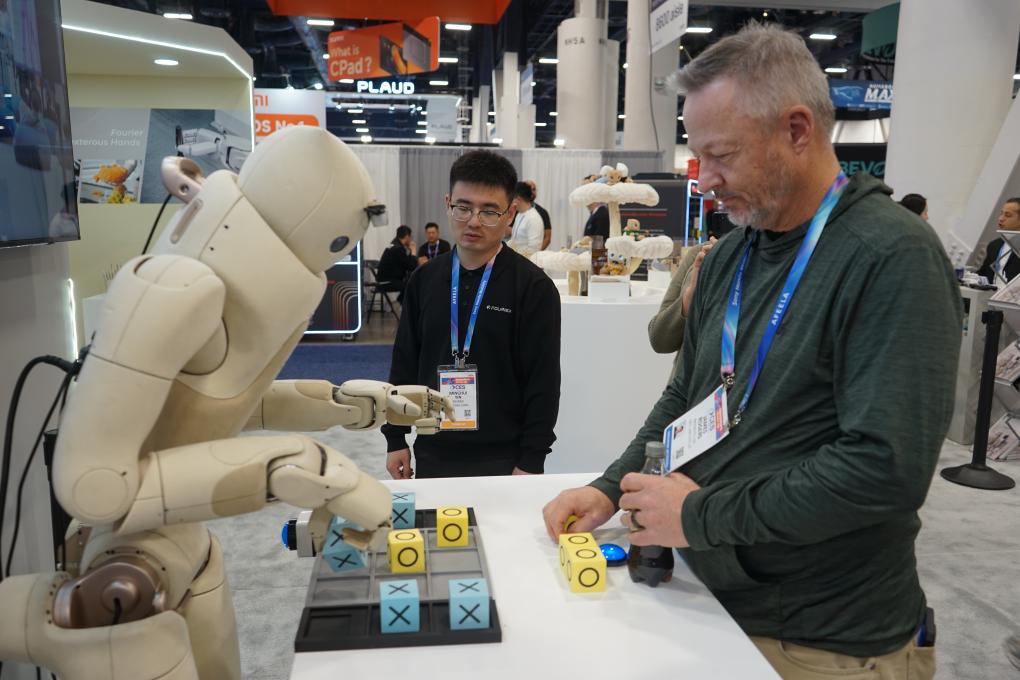
Robotics is one of the most closely watched exhibition areas at this year’s CES. From humanoid robots and autonomous mobile robots to service robots and industrial robots, exhibits covered manufacturing, logistics, retail, and elderly care. The focus is no longer on whether robots can move, but on whether they can operate stably over the long term.
Unlike previous years, which emphasized conceptual demonstrations, this year’s robot exhibits clearly target specific application scenarios and place greater emphasis on real-world usability. Reporters observed multiple robots running continuously in simulated warehouse, retail, and public service environments, capable of autonomously planning routes, recognizing objects, and completing multi-step operations.
In logistics and warehousing, robots handle sorting, transportation, and shelf replenishment. In manufacturing, they perform highly repetitive or high-risk processes. In service settings, robots act as guides, food delivery staff, baristas, and tea servers, providing emotional value as well as stable and refined service experiences.
Cliff Henderson, dean of the College of Engineering and professor of chemical and biological engineering at the University of Alabama, told Xinhua that this year’s CES robot displays are diverse and more capable, especially service robots, which perform strongly in automation and stability. He noted in particular that China’s robotics industry is developing rapidly, with robots able to carry out daily tasks continuously and reliably. As perception, computing, and control technologies continue to advance, robots are gradually moving out of laboratories and into real production and daily life scenarios.
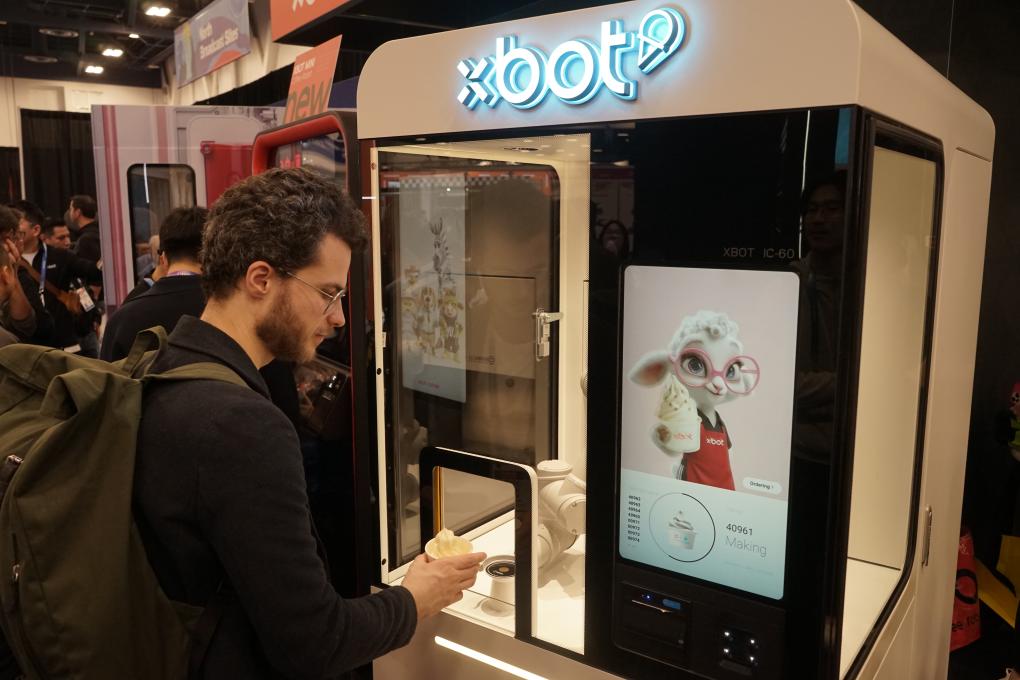
On January 7, 2026, people experience the Yingzhi XBOT ice cream robot at the 2026 Consumer Electronics Show in Las Vegas. (Xinhua Photo by Zeng Hui)
On-Device and Cloud Collaboration
Another notable change at this year’s CES is where AI runs. More and more products are choosing to run AI models locally on end devices to meet real-time, energy-efficiency, and privacy needs, while the cloud continues to handle training, updates, and cross-device coordination.
This trend is especially evident in personal computers, in-vehicle systems, and wearable devices. Some exhibits demonstrated the ability to perform complex reasoning and interactions offline, reducing dependence on the cloud.
Meng Pu, chairman of Qualcomm China, told Xinhua that the future of AI is not a binary choice between “cloud” or “edge.” The model capabilities of the cloud and the instant response capabilities of end devices need to complement and co-evolve with each other. The division of labor and collaboration between edge and cloud will become a key architectural feature of future AI development.
CES Reflects Shifts in Industrial Logic
This year’s CES shows that AI is not only changing product forms, but also reshaping industrial division of labor. As AI deployment accelerates, the importance of chips, manufacturing, and system integration is rising sharply. AI is no longer just the domain of internet companies.
At the same time, deep integration of software and hardware has become the focus of competition. Single technological breakthroughs are no longer enough to create lasting advantages. Complete system capabilities and large-scale delivery capacity are becoming the new barriers to entry. Industry insiders note that AI is moving from a phase of rapid trial-and-error innovation into an industrial phase that places greater emphasis on reliability, safety, and long-term operation.
In this sense, CES is no longer just a showcase for new consumer electronics products, but is also becoming an important platform for observing the direction of the global AI industry. The transformation of AI from concept to deployment, and from virtual to physical, is accelerating on the CES stage.

You must be logged in to post a comment.