


People on the smaller vessel, a simple fishing skiff, held up cellphones like emergency flares in the night. The larger craft pulled closer.
A figure bundled in a bulky jacket and a black ball cap waved her arms. “It’s me, María.”
Venezuelan opposition leader María Corina Machado had just endured the most perilous leg of her escape from her home country on her way to receive the Nobel Peace Prize in Norway. It was early Tuesday morning when the extraction team rescued her. Part of it was recorded on video viewed by The Wall Street Journal.
For the past three hours, Machado and a small crew had drifted on a skiff in the Gulf of Venezuela after its GPS fell overboard on rough seas and a backup failed. She didn’t meet the extraction team at a designated pickup point, setting off a scramble to find her in the hazardous waters.
Bryan Stern, a bearded U.S. combat veteran sent to extract Machado from Venezuela, said he hauled her onto the bigger boat and gave her snacks, Gatorade and a dry sweater. He alerted his team that Machado was on board: “Jackpot, jackpot, jackpot.”
In a proof-of-life video sent to U.S. officials and shared with The Wall Street Journal, Machado tries to steady herself as the boat tosses on the waves. “My name is María Corina Machado,” she says, “I am alive, safe, and very grateful.”
Stern, who leads an organization specializing in such extractions, staffed by former special operations and intelligence veterans, called the mission Operation Golden Dynamite. It’s a reference to the Nobel Peace Prize and its founder, Alfred Nobel, the Swedish chemist who invented dynamite.

New details from Stern and another person familiar with the operation, as well as timestamped text messages, videos and photos of the mission reviewed by the Journal, paint a picture of a dangerous expedition that almost failed.
Over three days, Stern and more than three dozen associates spirited the chief rival of Venezuela’s authoritarian leader, Nicolás Maduro, out of the country amid the Trump administration’s escalating campaign to force him from power. She has lived in hiding since a 2024 election that she was barred from running in but her party nonetheless won, according to the U.S.—results Maduro ignored.
Stern said he was in constant touch with senior U.S. military officials before and during the operation: sharing their live location, describing the roadblocks, sending updates, and at one point asking if the military could spot Machado’s boat when they had lost communication with it.
The State Department and the Pentagon referred questions to the White House. The White House didn’t respond to requests for comment and administration officials had earlier disputed military contact.
The operation was funded by private donors, said Stern, without U.S. government money. But American officials—from the White House to senior military officers to regional diplomats—followed the journey in real time through WhatsApp messages and voice memos from Stern and his team.
Machado’s odyssey took almost three days: She traveled by land from a suburb of Caracas to a fishing village on the Caribbean coast of Venezuela, and then by boat to the Dutch island of Curaçao—a sea journey that took roughly 12 hours.
From there, a private jet picked her up and flew her to Oslo. She just missed Wednesday’s prize ceremony, where her daughter accepted the award.
Stern’s operation kicked off at 9 p.m. on Friday, Dec. 5. He was waiting to board a flight from Miami to Tampa when he received a call from a former colleague who used to work in U.S. intelligence.
His contact said he had a special assignment to extract an important “package” from Venezuela.
When his contact slipped that it was a “her,” Stern immediately knew it was Machado. He also knew it would be the most high-stakes extraction of his career. “This is a counterintel guy’s dream or nightmare,” he said.
Stern’s Tampa-based Grey Bull had been positioning teams in the Caribbean to offer its services to U.S. citizens in Venezuela in case of potential military action. “We had the framework for all this done for months,” he said.
A U.S. Army and Navy veteran awarded a Purple Heart, Stern founded Grey Bull in 2021, leading private evacuation missions in war zones from Afghanistan to Gaza. He worked in Venezuela as well and had recently prepared for possible U.S. military action there, setting up an operations base in the nearby island of Aruba, in the event American citizens needed to leave fast. Stern said his firm has close links to U.S. military and intelligence agencies.
Extracting Machado would entail moving an instantly recognizable person, Venezuela’s iconic opposition leader who went into hiding after a government crackdown on opposition activists who had exposed election fraud, just when everyone expected her to be on the move.
“Everyone knows her face,” Stern said. “Moving María is like moving Hillary Clinton.”
As they planned at least nine possible scenarios, from air or helicopter rescues to taking her out through Guyana or Colombia, Stern said his team planted false rumors to keep the world looking for her in the wrong places. Some tales put her in Europe, others in a car headed for Colombia, and another that she had sneaked out of the country aboard a U.S. flight that had dropped off deportees from Venezuela.
Inside and outside Venezuela, people who were closely following the drama debated whether the Maduro regime had infiltrated her movement and was tacitly allowing her to leave, calculating that Machado outside the country would quickly fade into political irrelevance. Stern denied having any help from Venezuelan government or military officials.
On Monday afternoon, Machado left her hideout in a wig and a disguise. Stern’s team also took special care to make sure that Machado and the team weren’t tracked digitally.
The plan, Stern said, was for Machado and her associates to rendezvous with operatives waiting for her in the fishing village, then travel on their small boat across the Gulf of Venezuela to an agreed-upon meeting point in the middle of the sea. From there, Stern would take her to Curaçao.
Almost immediately, things started to go wrong.
The operatives waiting for Machado at the beach were struggling with mechanical issues. They had chosen an intentionally rundown fishing boat, hoping to distinguish it from the special-purpose boats used by drug smugglers that the U.S. military has been bombing in recent months.
The team was aware that there was a very small window of opportunity. Once Machado got to the beach, every minute would count.
Fixing the engine problem caused a 12-hour delay. Machado and the crew planned to leave at the crack of dawn on Tuesday, but left as the sun was setting instead. Once at sea, the open boat faced waves up to 10 feet that led one of the crew members to vomit overboard for much of the journey, Stern said. While the poor conditions slowed them down, the bad weather helped hide the vessel from maritime radars, he said.
Getting bombed by the U.S. was a constant worry. The U.S. has recently mounted the largest military buildup the region has seen in decades, sinking more than 20 alleged drug-smuggling vessels. Stern said he let U.S. defense officials know that he was operating in the area. He was aware that two boats doing a handoff in the dark of night would look suspicious.
Stern recounted what he told U.S. military contacts. “Number one, keep an eye on us. Number two, don’t kill us. And number three, if you’re doing something, let us know and we’ll get out of the way.”
Stern approached the agreed-on pickup point on a 31-foot center console boat—bigger than Machado’s skiff but still vulnerable on treacherous open seas. At 5 p.m., close to sunset, he texted a senior U.S. Navy officer with their location and a description of the operation. Six hours later, Machado’s boat still hadn’t arrived. More alarmingly, it had gone completely dark.
“She didn’t show,” Stern texted the U.S. military official in messages he read to the Journal. “Any eyes in the sky?”
The officer texted back immediately: “Ugh, got cold feet? Maybe reset and try again?”
Stern decided to stick it out. “Gonna hold for two hours, give them a chance, and then we’re gonna bounce.”
All the time, Stern feared his boat was a sitting duck for Venezuelan security forces.
“We are gonna get real quiet, real low, turn off everything,” he said.
Around 11 p.m., communication suddenly crackled back to life. Machado’s boat was off the agreed meeting point by 25 miles. When they finally located the skiff, they flashed a light on the passengers to make sure they weren’t armed. Machado boarded the second vessel.
“Hi, my name is Bryan Stern, nice to meet you,” he told Machado, thinking his American accent would be reassuring.
He sent a photo through satellite phone and Starlink to U.S. government and military officials, showing the two of them with tired smiles on the dark boat.
On the rough ride to Curaçao, Machado talked mostly about her daughter, whom she hasn’t seen for two years, said Stern.
In Curaçao, Stern said, he spoke once to Dutch authorities on the island, but intentionally didn’t brief them to keep them from being thought complicit and drawing the ire of neighboring Venezuela.
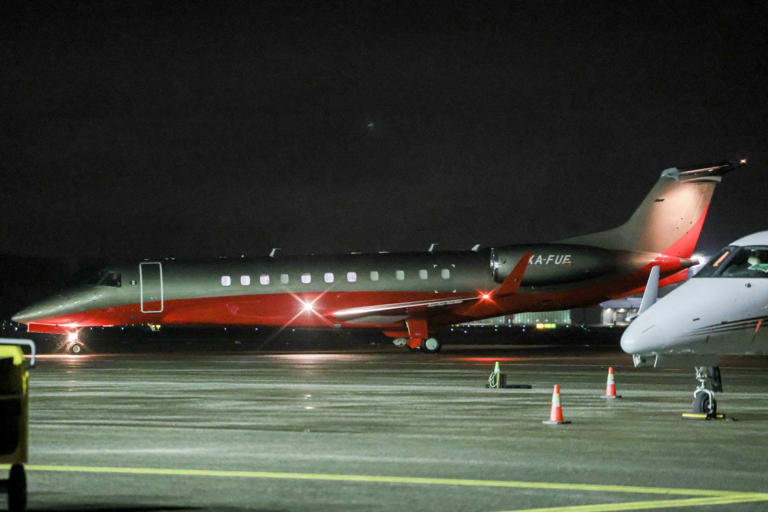
Curaçao allows a 24-hour window to formally enter the country and go through customs. Machado only stayed on the island for a few hours. Wednesday morning, she boarded a private jet that had flown there from Miami, provided by one of the donors to the operation. It left for Oslo at 6:42 a.m.
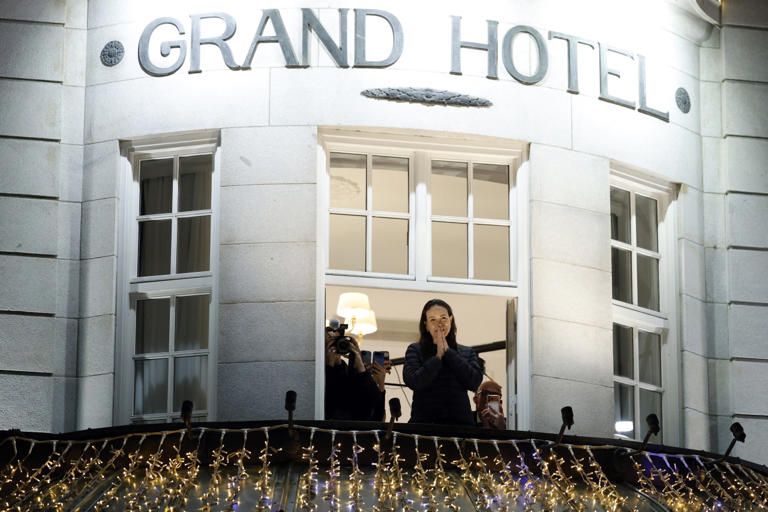
There, in a speech to supporters, she called the rescue operation a “miracle.”

You must be logged in to post a comment.