


Introduction
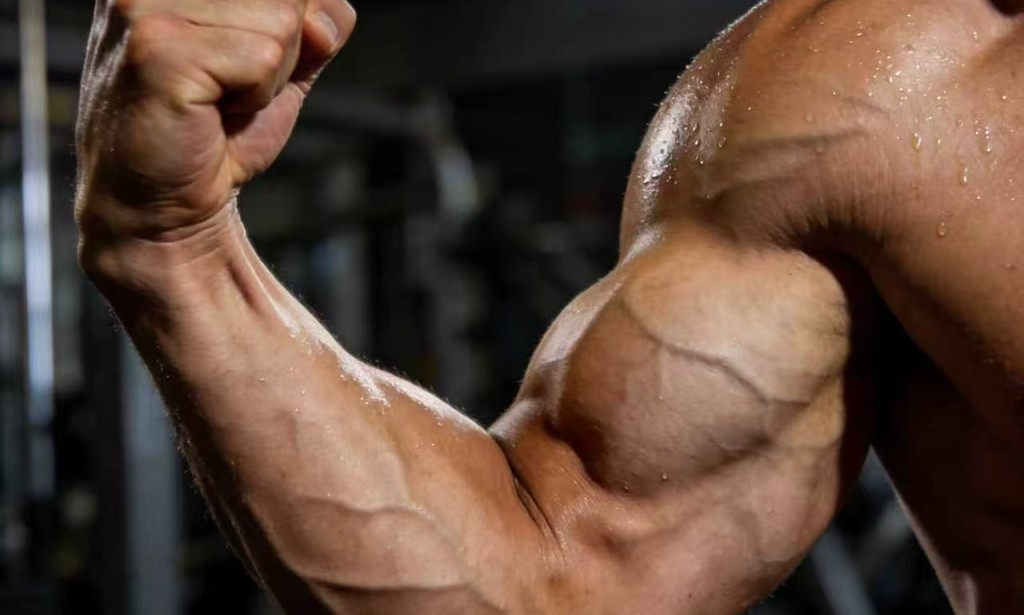
Arms are often the "showcase muscles"—we roll up our sleeves to reveal them at the beach, in casual outfits, or during workouts. But beyond aesthetics, strong arms are foundational for daily movements (from lifting groceries to opening doors) and overall upper-body strength. Yet most people make critical mistakes: endless bicep curls without results, ignoring triceps (which make up 2/3 of arm mass), or sacrificing form for heavy weights. This guide breaks down scientific arm training to help you build lean, powerful arms safely—no guesswork, no wasted effort.
Why Strong Arms Matter (Beyond Looking Good)
Strong arms offer far more than visual appeal. A study published in the Journal of Strength and Conditioning Research found that arm strength correlates with improved upper-body functional capacity, reducing injury risk in daily life and sports. For athletes, stronger biceps and triceps enhance performance in activities like tennis, basketball, and weightlifting. Metabolically, building arm muscle boosts resting calorie burn—each pound of muscle burns 6 calories daily at rest, compared to 2 calories for fat. Additionally, balanced arm development improves posture by counteracting rounded shoulders, a common issue from desk jobs. Whether you’re aiming for sculpted biceps, defined triceps, or functional strength, scientific training is the key to sustainable results.
Arm Muscle Anatomy: Train Smarter, Not Harder
To train arms effectively, you need to understand the muscles you’re targeting:
• Biceps Brachii: The "guns" on the front of your upper arm, responsible for elbow flexion (curling) and forearm supination (turning palms up). It has two heads (long and short) that respond best to varied angles.
• Triceps Brachii: The three-headed muscle on the back of the upper arm, crucial for elbow extension (pushing). Neglecting triceps means missing out on most arm mass—prioritize them!
• Forearms: Often overlooked, forearms support grip strength and arm stability. Weak forearms limit progress in other lifts (like pull-ups) and lead to imbalances.
• Brachialis: Located under the biceps, this muscle adds thickness to the upper arm. Training it with neutral-grip movements (palms facing each other) creates a "fuller" arm look.
Core Principles of Scientific Arm Training
1. Progressive Overload
Muscles grow when challenged beyond their current capacity. Gradually increase weight, reps, or reduce rest time. For example: If you curl 20lbs for 3 sets of 10, next week try 22.5lbs or 12 reps per set. Track progress with a notebook or app—consistency beats random training.
2. Balance Between Push and Pull
Triceps (push muscles) and biceps (pull muscles) must be trained equally to avoid imbalances. A common mistake is 3x more bicep work than tricep—fix this by matching sets (e.g., 3 sets of curls = 3 sets of dips).
3. Proper Form > Heavy Weight
Poor form (like swinging during curls or arching your back during tricep extensions) reduces muscle activation and increases injury risk. Focus on controlled movements: 2 seconds to lift, 1 second hold, 3 seconds to lower. Imagine "squeezing" the target muscle at the top of each rep.
4. Variation Without Chaos
Change exercises every 4-6 weeks to avoid plateaus, but stick to compound movements (which work multiple muscles) first, then isolation exercises. For example: Start with chin-ups (targets biceps + back) before bicep curls (isolation).
The Ultimate Scientific Arm Training Routine
Warm-Up (10 Minutes)
Never skip warm-ups—cold muscles are prone to strains. Do:
• Arm circles (forward/backward): 1 minute each direction
• Band pull-aparts: 2 sets of 15 (activates shoulders and upper back)
• Light dumbbell curls: 1 set of 15 (preps biceps)
• Bodyweight dips (or bench dips): 1 set of 12 (warms triceps)
• Wrist stretches: 30 seconds each wrist (forearm prep)
Workout (45-60 Minutes)
Aim for 2-3 arm-focused sessions weekly, with 48 hours of rest between sessions (muscles repair during rest!).
Compound Movements (Prioritize These First)
1. Chin-Ups (or Assisted Chin-Ups)
Target: Biceps, forearms, back
How: Grip the bar with palms facing you (supinated grip), pull your chest to the bar. Lower slowly.
Sets/Reps: 4 sets of 6-10 reps. Add weight with a belt once you can do 12+ reps.
2. Close-Grip Bench Press
Target: Triceps, chest, shoulders
How: Grip the bar slightly narrower than shoulder-width, lower to mid-chest, push up explosively.
Sets/Reps: 4 sets of 8-10 reps. Keep elbows close to your body (not flared out).
Isolation Exercises (Target Specific Muscles)
1. Barbell Bicep Curls
Target: Biceps brachii
How: Hold a barbell with palms up, keep upper arms stationary, curl the bar to your shoulders. Lower slowly.
Sets/Reps: 3 sets of 10-12 reps. Avoid swinging—use a weight that challenges you in the last 2 reps.
2. Tricep Dips (Weighted if Possible)
Target: Triceps, chest
How: Sit on a bench, grip the edge, slide forward. Lower your body by bending elbows, then push back up.
Sets/Reps: 3 sets of 10-15 reps. Lean forward to emphasize triceps (lean back for more chest engagement).
3. Hammer Curls
Target: Brachialis, forearms, biceps
How: Hold dumbbells with palms facing each other (neutral grip), curl upward. Squeeze at the top.
Sets/Reps: 3 sets of 12 reps. This builds arm thickness you can’t get from regular curls.
4. Tricep Pushdowns (Cable)
Target: Triceps lateral head
How: Grip a cable with palms down, keep upper arms close to your sides, push the cable down until arms are straight.
Sets/Reps: 3 sets of 12-15 reps. Use a slow eccentric (lowering) phase to maximize muscle growth.
5. Farmer’s Carry
Target: Forearms, grip strength
How: Hold heavy dumbbells/kettlebells at your sides, walk for 40-60 seconds.
Sets: 3 sets. This simple movement transforms weak forearms into strong, defined ones.
Cool-Down (5 Minutes)
Static stretching reduces soreness and improves flexibility:
• Bicep stretch: 30 seconds per arm (extend arm straight, pull forearm with opposite hand)
• Tricep stretch: 30 seconds per arm (lift arm overhead, bend elbow, pull forearm down)
• Wrist flexor/extensor stretches: 20 seconds each (hold a wall or bench, stretch wrists up/down)
Common Arm Training Mistakes (And How to Fix Them)
1. Overtraining
Training arms every day leads to overuse injuries (like tennis elbow) and stunts growth. Muscles need 48 hours to repair—stick to 2-3 sessions weekly.
2. Ignoring Triceps
If your arms aren’t growing, check your tricep volume. Do at least as many tricep sets as bicep sets. Try adding 1 extra tricep exercise (like skull crushers) if you’re stuck.
3. Swinging During Curls
Swinging uses momentum instead of muscle—you’re just moving weight, not building arms. Use lighter weights and focus on controlled movements. Imagine there’s a wall behind your elbows—keep them pressed against it.
4. Neglecting Forearms
Weak forearms limit grip strength, making it hard to lift heavier in curls or pull-ups. Add farmer’s carries or wrist curls to every arm workout.
Nutrition for Arm Growth
Protein
Muscles repair and grow with protein—aim for 1.6-2.2g of protein per kg of body weight daily. Good sources: chicken breast, eggs, Greek yogurt, protein powder, lentils. Eat protein every 3-4 hours (e.g., 20-30g per meal) to keep muscle protein synthesis high.
Carbs
Carbs fuel your workouts—eat complex carbs (oats, rice, sweet potatoes) 1-2 hours before training to avoid fatigue. Post-workout, pair carbs with protein (e.g., banana + protein shake) to replenish glycogen.
Hydration
Dehydration reduces performance and muscle recovery. Drink 3-4 liters of water daily, and sip water during workouts. Avoid excessive sugar or caffeine, which dehydrate you.
Tracking Progress
Strength Gains
Record weights, reps, and sets for each exercise. For example: If you did 3 sets of 10 with 25lb dumbbells for curls, note it. When you can do 12 reps easily, increase weight by 2.5-5lbs.
Visual and Measurement Tracking
Take monthly photos of your arms (same lighting, pose) to see changes. Measure upper arm circumference (mid-bicep, flexed and relaxed) with a tape measure. Even 0.5-inch growth is progress—celebrate it!
Conclusion
Scientific arm training isn’t about endless reps or heavy weights—it’s about understanding your muscles, following core principles, and being consistent. Focus on balance (triceps + biceps + forearms), prioritize form, and fuel your body properly. Whether you’re a beginner or a seasoned gym-goer, this routine will help you build arms that are not only aesthetic but also strong and functional. Remember: Progress takes time—stick with it, and you’ll see results in 8-12 weeks. Now grab your dumbbells, perfect that form, and unlock your arm’s full potential!

You must be logged in to post a comment.