


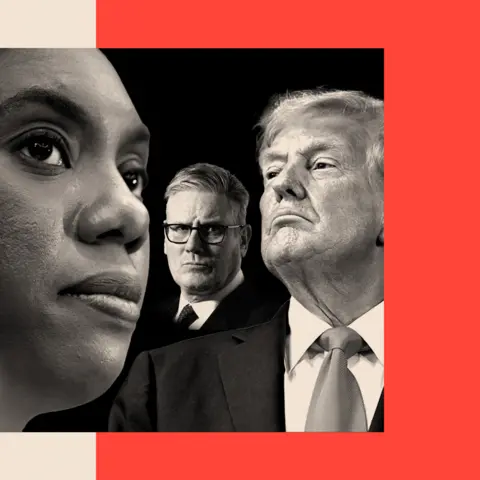
 BBC "Keir can't be the last gasp of the dying world order," warns a minister. The prime minister finds himself in charge when the globe is being bent into a new shape by his big pal in the White House. While a lot has gone wrong at home, Downing Street's handling of events abroad has broadly been considered a success. But as the pace of Donald Trump's activity around the world picks up - particularly in Venezuela and Greenland - the prime minister's increasingly assertive opponents at home are set on turning one of his few sweet spots sour. It is true there has been some squeamishness, particularly on the left of the Labour Party, over Starmer's closeness to Trump. It is a symptom of a traditional distaste for the schmaltz of the "special relationship", that did not start and will not end with Starmer and Trump. Think Blair being accused of being Bush's poodle over Iraq, or parodies of Margaret Thatcher and Ronald Reagan taking a spin on the White House dance floor. Whatever the personal vibes, it is always a transaction: "The unavoidable cost of doing business," one Labour MP says. This time, if you show loyalty and friendship to a controversial leader, it will be easier to agree a better trade deal than most of the rest of the world. Dangle royal invites to the US president, or be understanding of big US tech firms' desires, and there is a friendlier reception to requests for support for Ukraine. So far, so successful, with senior figures in government believing their foreign policy guru, Blair-era adviser Jonathan Powell, is "playing a blinder". But according to one senior Labour MP, there is a growing risk of "being linked to the madness". The prime minister could find himself squeezed by accusations of weakness from both sides of the aisle and with one big policy problem rising up the rails: how much money to spend on defence. Traditionally, the official opposition in the UK tends to stick with the government on foreign policy - I wonder if that feels rather quaint in the turmoil of 2026. An increasingly confident Kemi Badenoch, who will join us on the programme on Sunday, is paying scant attention to that now. She chose, unusually, to try and blast the prime minister on foreign policy in the Commons this week - claiming Starmer was irrelevant because he had spoken only to Trump's senior advisers five days after the strike on Venezuela, not to the president himself. She also lambasted him for not giving MPs and the public the full details of the deal agreed with France and Ukraine to put UK troops on the ground in the event of a peace agreement. Her team reckons she managed to puncture his authority on foreign policy this week. And you can expect the Conservatives to keep building an argument that the UK is not showing enough strength abroad. That begs the obvious question: what exactly would Badenoch do differently?
Starmer has kept Trump on side - but is it coming back to bite him?

About Author

You must be logged in to post a comment.