



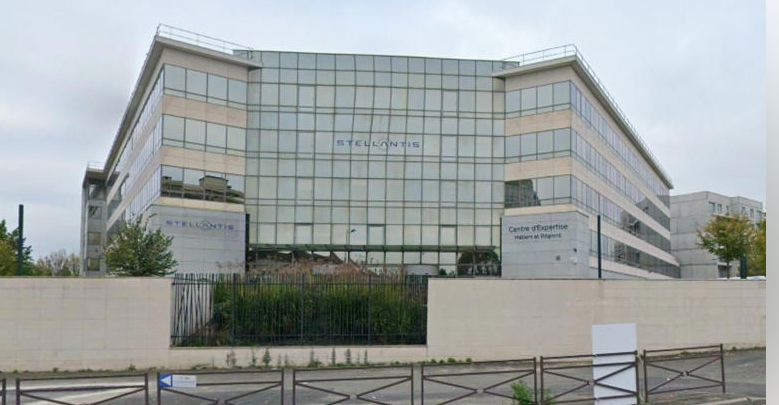
I see a clear throughline in the recent moves and leaks: leadership is preparing investors and workers for a smaller, more focused Stellantis, one that sacrifices heritage badges to protect margins and fund electric and software investments. The question is no longer whether some brands are in danger, but how many will go and how quickly the company can replace roughly 600,000 lost sales with more profitable metal.
The 10‑year promise that quietly shrank to five
When Stellantis was created from the merger of Fiat Chrysler and PSA Group, then chief executive Carlos Tavares tried to calm fears by promising each of the company's 14 brands a decade to prove they deserved fresh investment. That pledge, made in the glow of a new European conglomerate-sounding name, was meant to reassure fans of smaller marques like Lancia and DS that they would not be sacrificed in an early round of consolidation. According to later reporting, that generous runway did not survive the company's first serious bout of financial and regulatory pressure, and the internal deadline for tough calls was pulled forward to 2026, with the expectation that a new chief executive would be the one to swing the axe on underperformers, a shift detailed in coverage of how When Stellantis changed course.
The compressed timetable set the stage for the current crisis, because it forced every brand to chase volume and profitability targets on a much shorter horizon than originally advertised. That pressure is now colliding with a sharp downturn in shipments and a brutal EV transition, leaving little room for sentimentality about storied badges. The earlier promise of a decade of patience has effectively become a five year probation period, and the looming end of that window is why insiders now talk openly about multiple brands being sold or shuttered once the 2026 review is complete, a reckoning that traces back to the original Fiat Chrysler and PSA Group merger expectations.
A 2026 brand review that now looks like a cull
The formal mechanism for this shakeup is a groupwide review of all 14 brands that Stellantis leadership has scheduled to wrap up by 2026. Stellantis CEO Carols Tavares originally framed that process as a meritocratic exercise, saying each marque would need to justify its place in the portfolio by demonstrating clear product plans, regional roles, and financial performance, a stance laid out when Stellantis To Review The Future Of Its brands by the mid decade. At the time, that sounded like a strategic tune up, the kind of portfolio housekeeping any sprawling automaker periodically undertakes.
Today, with sales sliding and losses mounting, the same review reads more like a triage list. Internal discussions described by sources suggest that brands will be sorted into three buckets: core global players that receive heavy investment, regional specialists that survive with tighter budgets, and a final group earmarked for sale or closure if they cannot hit aggressive targets. The fact that this process is explicitly tied to the 2026 horizon, and that it covers every one of the 14 nameplates, is why analysts now treat it as the likely moment when as many as eight brands could be cut, a scenario that aligns with the way Troubled Stellantis Could Shutter Some Car Brands in 2026 has been framed.
From "all 14 stay" to Antonio Filosa's emergency room
The leadership change from Carlos Tavares to Stellantis CEO Antonio Filosa has accelerated the shift from cautious review to active downsizing. According to a report citing internal briefings, Filosa has been assessing the performance of all 14 Stellantis brands and is no longer treating the original multi brand strategy as sacrosanct, a stark contrast with the earlier insistence that every marque could thrive with the right plan, a reassessment captured in coverage that notes how According to internal thinking, some badges have simply failed to gain traction. Filosa is described as approaching the situation like an emergency room doctor, prioritizing the healthiest patients and preparing to let go of those that cannot be stabilized.
That metaphor is not just colorful language, it reflects a deeper strategic break. A detailed account of his early tenure explains that Filosa's fix means killing Stellantis' own strategy and maybe a few brands, with a source familiar with the plan saying the treatment involves abandoning the previous "14 brands at all costs" doctrine in favor of a smaller, more profitable lineup, a shift laid out in an analysis of What the new treatment plan entails. In that telling, Filosa inherited a company already under regulatory pressure and facing margin erosion, and he has concluded that the only way to restore financial health is to cut deeply into the brand roster rather than nibbling at costs around the edges.
Financial red ink and 600,000 missing sales
The urgency behind these brand decisions is rooted in hard numbers, not just boardroom theory. Stellantis has reported a significant loss for the first half of 2025, with preliminary figures showing a $2.7 billion deficit and a sharp drop from the previous year's performance, a reversal that has been detailed in coverage of how Stellantis moved from profit to red ink. That kind of swing is not something a global automaker can shrug off, especially when it coincides with heavy capital spending on electric platforms and software.
The company's own disclosures underscore how severe the volume problem has become. In its preliminary and unaudited key figures for the first half of 2025, Stellantis reported that global consolidated shipment volumes for the Second Quarter of 2025 fell sharply, with Q2 shipments in North America declining approximately in part due to product transition factors, a trend spelled out in the section on Global shipments for the Second Quarter of the year. Stellantis Reports First Half 2025 Results Reflecting External Headwinds and Ongoing Recovery Actions, and that same update notes that leadership is already pursuing restructuring moves and renewed focus to address the slump, a strategy outlined in the company's own summary that Stellantis Reports First Half results reflecting those headwinds. Put bluntly, the group is staring at roughly 600,000 lost sales over a short window, and the math behind that gap is driving the willingness to sacrifice weaker brands.
Which badges are most exposed
Inside that 14 brand roster, some names are clearly more vulnerable than others. Reporting on internal deliberations has repeatedly flagged Maserati, Lancia, and DS as potential candidates for sale or liquidation due to financial losses, with one account noting that brands like Maserati and Lancia have struggled to deliver consistent profits despite multiple relaunch attempts, a pattern summarized in an update that lists these Brands as underperforming. DS, positioned as a French premium marque, has also failed to gain meaningful traction outside a few European markets, making it a prime target for consolidation.
Other reports echo that list and add nuance about how these brands fit into the broader strategy. One analysis of the potential cuts notes that Stellantis may cut struggling brands like Maserati and Lancia, arguing that the company's previous reluctance to make tough decisions is giving way to a new policy that prioritizes scale and profitability over heritage, a shift described in detail in coverage of how Stellantis may cut struggling brands like Maserati and Lancia. A separate deep dive into the company's internal scorecard reinforces that Maserati, Lancia, and DS are all on the bubble, with their future dependent on rapid performance improvements that may be unrealistic in the current market, a conclusion that aligns with the warning that Troubled Stellantis Could Shutter Some Car Brands in the near term.
Chrysler's surprising reprieve amid the cuts
One of the more surprising twists in this story is that Chrysler, long rumored to be on life support, now appears to have a clearer future than some of its European siblings. Brand chief Christine Feuell has laid out a detailed product roadmap that includes a new generation of vehicles arriving in 2026, and insiders describe her as unusually open about what is coming, a level of transparency that signals confidence rather than retreat. The first new Chrysler products are expected to ride on a multi energy platform and include at least one fresh crossover, a pivot that has been outlined in depth in reporting on how Chrysler is not dead and has big changes and new vehicles coming in 2026.
That product wave gives Chrysler something many other Stellantis brands lack: a near term, concrete growth story that can be pitched to dealers and investors. While Dodge's lineup is described as anemic outside of the Durango in some assessments, Chrysler is being positioned as a key North American pillar alongside Jeep and Ram, with Feuell's roadmap serving as proof that the brand can still generate volume and margin in the electric era, a contrast that helps explain why some insiders now see Chrysler as safer than Maserati or Lancia despite its smaller current footprint, a perception that dovetails with the broader narrative that Stellantis CEO Antonio Filosa is judging brands on future potential rather than past glory.
North America's shrinking shipments and Chinese pressure
The North American business, once the profit engine of the old Fiat Chrysler side of the house, is now a source of concern that feeds directly into the brand culling debate. Stellantis has acknowledged that shipments in the region declined in the Second Quarter of 2025, attributing part of the drop to product transition factors as it phases out older models and ramps up new ones, a dynamic spelled out in its own disclosure on how shipments in In North America have been affected. That kind of volume erosion makes it harder to justify keeping niche brands that do not move the needle in the United States or Canada.
At the same time, Stellantis is trying to open a new front in the market by partnering with China's Leapmotor to sell electric vehicles in North America, a move that underscores how stretched its resources have become. One report on the company's strategic options notes that the group is considering closing some brands even as it prepares to import EVs made by China's Leapmotor, a juxtaposition that highlights the trade off between nurturing legacy badges and funding new technology, a tension captured in an analysis that explains how Automotive executives are weighing the costs of that Leapmotor tie up. In that context, cutting several low volume brands becomes a way to free capital and management bandwidth for the Leapmotor venture and other EV programs, even if it means walking away from decades of brand equity.
Analysts warn of a breakup if cuts are not enough
Even with aggressive brand pruning on the table, some veterans of the company doubt that trimming a few badges will be enough to fix Stellantis' structural problems. Ex Stellantis CEO Carlos Tavares has publicly floated the idea that a breakup of the group could be coming, suggesting that the sprawling portfolio might eventually be split into smaller, more focused companies if the current turnaround efforts fail, a stark warning laid out in coverage headlined Stellantis CEO Carlos Tavares Thinks a breakup could be coming. His comments carry weight because he was the architect of the original merger and understands how fragile the synergies can be when markets turn.
Other analysts have framed the current situation in similarly dire terms, arguing that Stellantis is sinking and must cut bloated areas to focus on more profitable brands for long term viability. One detailed assessment describes how the company is considering chopping some of its 14 brands as part of a broader effort to stabilize finances and sharpen its identity, a perspective captured in an analysis that notes Stellantis is sinking so it is time to see which bloated areas can be cut. Taken together, those warnings suggest that even a dramatic move like cutting eight brands might be only the first step in a longer process of restructuring, and that investors should not assume the 2026 review will be the final word on the group's shape.
What a leaner Stellantis means for buyers and rivals
If Stellantis does follow through and shed up to eight brands, the impact for car buyers will be uneven. Fans of niche European marques like Lancia and DS could see their local dealers disappear or be rebadged under surviving nameplates, while Maserati owners might face uncertainty about long term parts and service support if the brand is sold or wound down. At the same time, core badges such as Jeep Cherokee and Ram in Stellantis North Amer operations are likely to receive more focused investment, potentially leading to stronger products in high volume segments, a reallocation of resources that fits with the broader narrative around Jeep Cherokee and Stellantis North Amer strategy.
For rivals, a leaner Stellantis could cut both ways. On one hand, the disappearance of several brands would reduce competition in certain niches, giving companies like BMW, Ford, and Kia more room to maneuver in segments where Stellantis has been a marginal player, a shift that aligns with the way Popular Makes

You must be logged in to post a comment.