


Since the launch of the James Webb Space Telescope in 2021, astronomers have repeatedly observed numerous tiny, reddish light sources in the universe, which is only a few hundred million years old. The nature of these celestial objects has remained a mystery. Previously, astronomers believed that these objects might be supermassive primordial galaxies or rare celestial formation events that are difficult to explain with existing theories.
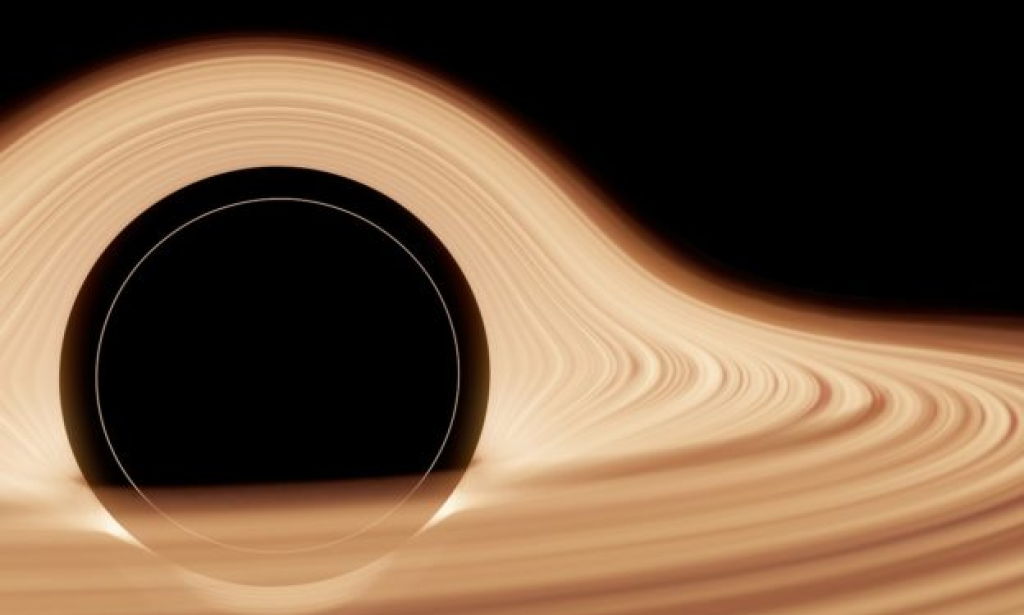
After two years of systematic analysis, the research team confirmed that these "little red dots" are actually young black holes surrounded by dense cocoons of ionized gas. When a black hole devours surrounding gas, the accretion process releases a large amount of energy, heating the gas surrounding the black hole and causing it to emit radiation. This radiation is scattered as it passes through interstellar gas, resulting in the distinct red glow captured by the James Webb Space Telescope in the infrared band.
The study indicates that the masses of these black holes are about one percent of previously estimated values, far lower than astronomers' earlier estimates. Therefore, the observed features can be explained without assuming entirely new celestial body formation events. Nevertheless, their masses are still millions to tens of millions of times that of the Sun, and their sizes span millions of kilometers, showing that black holes were already effectively accumulating mass in the very early stages of the universe's birth.

Generally, black holes have limited accretion efficiency, and large amounts of falling gas are ejected back into interstellar space as high-energy jets. However, during this growth stage, the surrounding gas cocoon simultaneously acts as a fuel reservoir and a "lighting device," allowing astronomers to directly observe the unprecedentedly violent growth period of black holes.
This finding fills a crucial gap in understanding how supermassive black holes formed rapidly over the past billion years since the birth of the universe, and also helps to understand the origin of massive celestial bodies such as the black hole at the center of the Milky Way.

You must be logged in to post a comment.