


1. The Sun: Our Fiery Star
At the heart of the Solar System lies the Sun, a star that provides the energy necessary to sustain life on Earth. Composed primarily of hydrogen and helium, the Sun’s energy comes from nuclear fusion, a process that powers its light and heat. Its intense gravity keeps the planets and other celestial objects in orbit.
Illustration #1: The Sun’s Outer Layers
This image could depict the Sun's outer layers, including the corona, photosphere, and chromosphere. The Sun's surface appears as a glowing, dynamic surface, while the corona shows a halo of plasma that extends far into space.
2. The Inner Planets: Rocky Worlds
The four inner planets—Mercury, Venus, Earth, and Mars—are all rocky in nature. They are relatively small compared to their outer counterparts and are located closer to the Sun. Each of these planets has unique features that make them interesting subjects for scientific study.
-
Mercury, the closest planet to the Sun, experiences extreme temperature fluctuations due to its lack of atmosphere.
-
Venus is often referred to as Earth’s “twin” because of its similar size, but its atmosphere is thick with clouds of sulfuric acid and its surface is incredibly hot.
-
Earth is the only known planet to support life, with liquid water covering much of its surface.
-
Mars, the “Red Planet,” has long been a subject of interest for exploration, with evidence of past water flows suggesting it may have once supported life.
Illustration #2: The Inner Planets
This image could show a comparison of the four inner planets, with Mercury, Venus, Earth, and Mars aligned in order from the Sun. Each planet's distinct color, size, and surface features should be highlighted to emphasize their diversity.
3. The Outer Planets: Gas Giants and Ice Giants
Beyond the asteroid belt lies the outer Solar System, where the gas giants Jupiter and Saturn, and the ice giants Uranus and Neptune reside. These planets are much larger than the inner planets and are primarily composed of hydrogen, helium, and other gases.
-
Jupiter, the largest planet, is known for its Great Red Spot, a massive storm that has been raging for centuries.
-
Saturn, with its spectacular ring system, is the second-largest planet and a beautiful example of the diversity of planetary features.
-
Uranus and Neptune are often referred to as ice giants because of the higher presence of water, ammonia, and methane in their atmospheres. These planets are unique in that Uranus has a tilted axis, making it spin on its side.
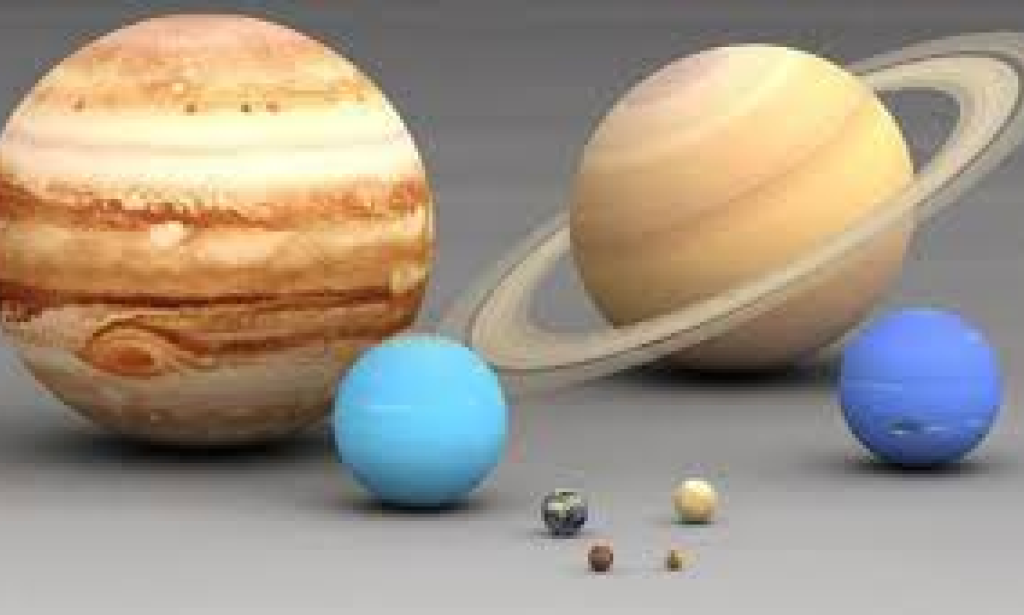
Illustration #3: The Outer Planets
This illustration could showcase the four outer planets, emphasizing the rings of Saturn and the storm on Jupiter. The gas and ice compositions of these planets could be represented with swirling atmospheric patterns.
4. Moons and Other Fascinating Objects
The Solar System is not only home to planets, but also a wide variety of moons, asteroids, comets, and dwarf planets. For example, Jupiter’s moon Europa is believed to have an ocean beneath its icy surface, raising questions about potential life beyond Earth. Saturn’s moon Titan has lakes of methane and an atmosphere rich in organic compounds, making it one of the most intriguing moons in the Solar System.
Illustration #4: Moons of the Solar System
This image could feature some of the most famous moons, including Europa, Titan, and our own Moon, alongside distant comets and asteroids. Their varying sizes and compositions could be highlighted.
Conclusion
From the blazing Sun to the icy moons of the outer planets, the Solar System offers an endless array of mysteries and wonders. The study of these celestial bodies continues to provide scientists with new insights into the origins of our own planet and the potential for life elsewhere in the universe. With advancements in space exploration and technology, we can only imagine what new discoveries lie ahead.

You must be logged in to post a comment.