



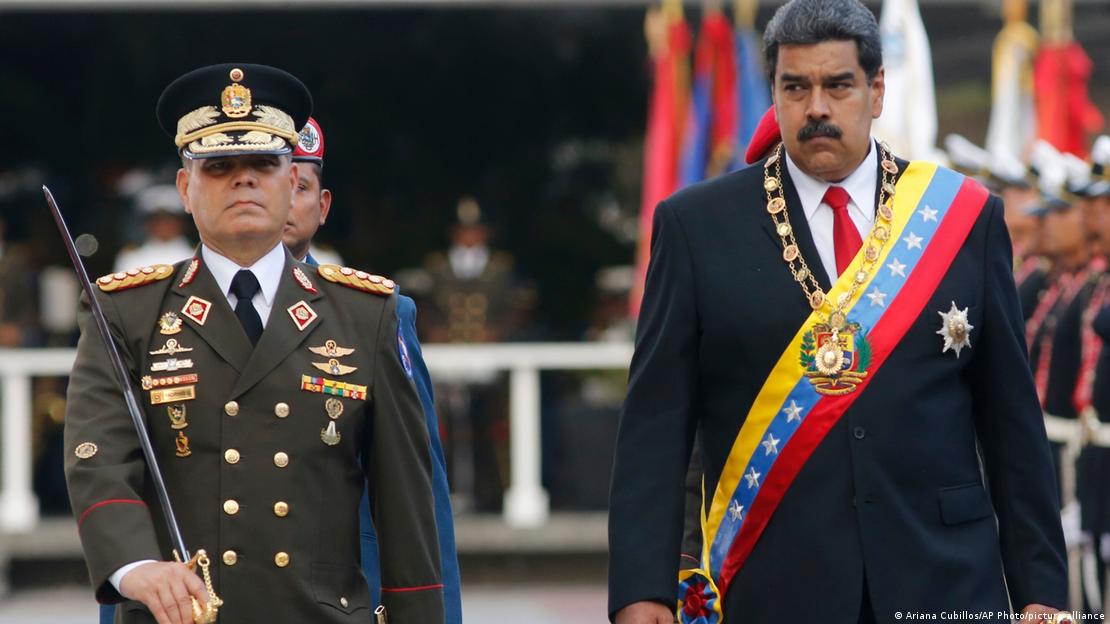
Trump has repeatedly called the Venezuelan president and his government "drug lords and terrorists," and even offered a $50 million reward for Maduro's capture.Image source: DW
(Deutsche Welle) U.S. President Donald Trump posted a brief message on social media on Saturday warning against flying over Venezuela, marking the latest escalation of his stance against the Latin American country.
What did Trump say?
Trump posted on his Truth Social platform: "To all airlines, pilots, drug dealers, and human traffickers, please treat the airspace over and around Venezuela as completely closed." The US president did not provide further details.
But his message came as U.S. aviation regulators warned major airlines that flying over Venezuela could pose "potential dangers" due to the country's "deteriorating security situation and increased military activity in or around the country."
Will the United States launch a land operation in Venezuela?
Trump stated that the U.S. military would "soon" begin operations against "Venezuelan drug traffickers" within Venezuela . He indicated that U.S. operations had largely cut off South American drug traffickers' routes through the Caribbean, therefore "the next step will be to stop them on land." However, Trump did not specify what form of action would be taken.
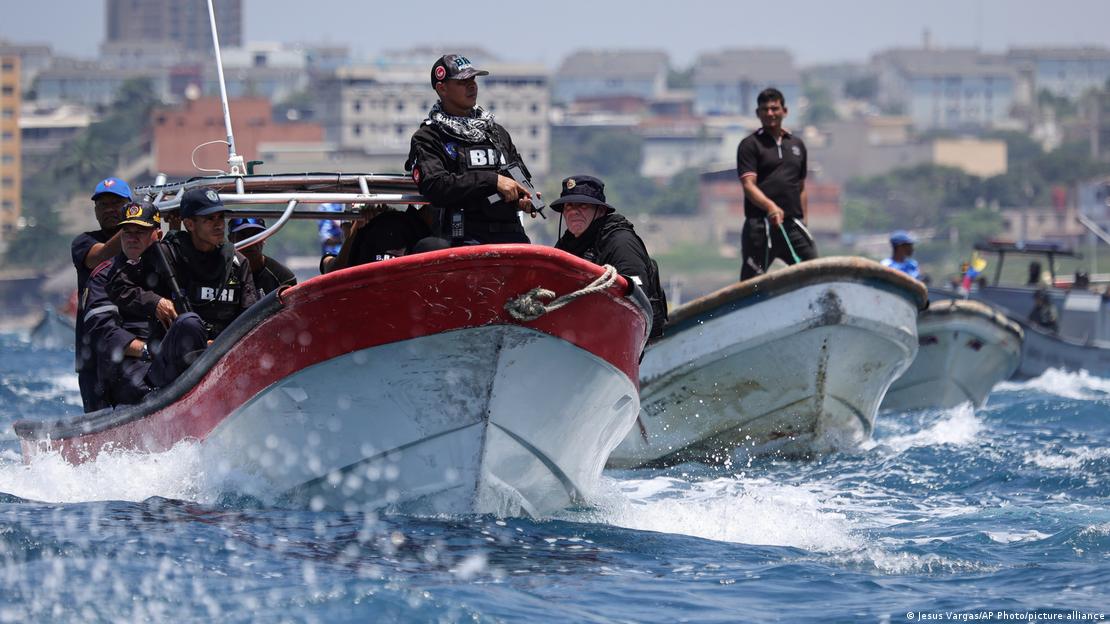
Since early September, the United States has attacked approximately 20 speedboats—mostly from Venezuela—in the southern Caribbean, carrying suspected drug smugglers, resulting in the deaths of more than 80 people. Venezuela has called these attacks “extrajudicial killings .” International observers and experts also believe that such actions clearly violate international law.


Operation Southern Spear
The Venezuelan leadership appears more concerned about the military power displayed by these U.S. actions. Over the past three months, the U.S. Navy has amassed a considerable force off the Venezuelan coast, including approximately 12,000 soldiers and more than a dozen warships, including even the world's largest aircraft carrier .
The United Socialist Party of Venezuela (PSUV), which has been in power for over 20 years and is increasingly becoming authoritarian, and is led by President Nicolas Maduro , sees this as a direct threat to national sovereignty and even to their own rule.
The US says the military operation, now named "Southern Spear," aims to combat drug trafficking from South America to the US. However, such a massive deployment raises questions about whether its purpose extends beyond this. Geopolitical interests , such as weakening China and Russia's influence in the region, and economic considerations— Venezuela possesses the world's largest oil reserves —are both considered potential motives .

The "Sun Group" has been designated a terrorist organization.
There is no doubt that the US government intends to put pressure on Venezuela. Trump has repeatedly referred to the Venezuelan president and his government as "drug lords and terrorists." The US has even offered a $50 million reward for Maduro's capture, double the reward offered for Osama bin Laden, the mastermind behind the 9/11 attacks.
Earlier this week, the "Cartel de los Soles" (Spanish: Cartel de los Soles) – an organization allegedly led by Maduro – was officially designated a terrorist organization by the United States. The organization, named after the "sun" insignia worn on the shoulder epaulets of Venezuelan military officers, is considered a criminal organization suspected of having ties to the Venezuelan military. Venezuela's ruling PSUV party has historically relied heavily on the military to maintain its rule. Coupled with Venezuela's recent status as one of South America's most important drug trafficking hubs, this has fueled speculation about government involvement in drug trafficking.
Venezuela is accelerating its military buildup—and it's not just talk.
Maduro denies the existence of the "Solar Group," calling the accusations "absurd lies" aimed at finding a pretext for "illegal interference" in Venezuela. Meanwhile, he and his core cabinet members continue to incite nationalism. On Thursday, at the 105th anniversary celebration of the Venezuelan Air Force, Defense Minister Vladimir Padrino López called on the nation to "defend the country with their lives" if necessary.
Since September, the Venezuelan government has trained thousands of civilians in armed skills and mobilized tens of thousands of militia. In early November, the Venezuelan military reportedly conducted a massive exercise involving approximately 200,000 soldiers and paramilitary personnel—almost two-thirds of the country's active-duty military. Maduro has also claimed that another 4.5 million trained civilians are available for deployment.
Is Trump aiming for "regime change"?
Trump's vague announcement of "land military action" has further fueled speculation that he intends to overthrow Maduro's regime by force. However, experts generally believe that this is unlikely.
Christian Cwik, a Latin American historian at the University of Klagenfurt, said, "I don't think the United States plans a ground invasion in Venezuela, which could repeat the mistakes of Vietnam." From 1965 to 1975, the United States attempted to influence the course of the Vietnamese Civil War through military intervention to support anti-communist forces, but ultimately failed.
However, some experts, including Tsevich, believe that a targeted missile or airstrike on suspected smuggling infrastructure is possible. Günther Maihold, a political scientist at the Free University of Berlin, also points out that the target could be to weaken the PSUV leadership. However, there are currently no indications that the US will take such action. Moreover, both experts emphasize that a US attack could potentially reunite the already deeply divided Venezuelan population in support of the government.

Is Trump seeking a "deal" with Venezuela?
According to a report this week by the US news website Axios, citing government sources, while issuing a new round of threats, Trump also seemed to convey a willingness to engage in dialogue to Maduro.
Francisco Rodriguez, a political scientist at the University of Denver, was not surprised. A week ago, he wrote in Foreign Affairs magazine: "Throughout his term, Trump has consistently used the tactics he described in his 1987 book, 'The Art of the Deal,' to deal with complex issues: escalating the situation to pave the way for negotiations."
Phillip Gunson of the International Crisis Group (ICG) holds a similar view: "It seems that Trump's instinct is to resolve the issue through negotiation, rather than getting involved in war." However, further escalation seems inevitable. Gunson points out that if Trump's threats don't work and the US doesn't take military action, "then the fleet will have to withdraw without completing its mission—and bear the political consequences."

You must be logged in to post a comment.