



Recently, Trump's new peace plan for Russia and Ukraine, the so-called "28-point plan", has once again brought this controversy to the forefront. The plan was interpreted as a "28 percent" split between the United States and Russia in Ukraine's interests, according to the White House, its core provisions include calls for Ukraine to abandon eastern Donbass, drastically reduce its military forces, hand over some weapons and equipment, and suspend the process of joining NATO.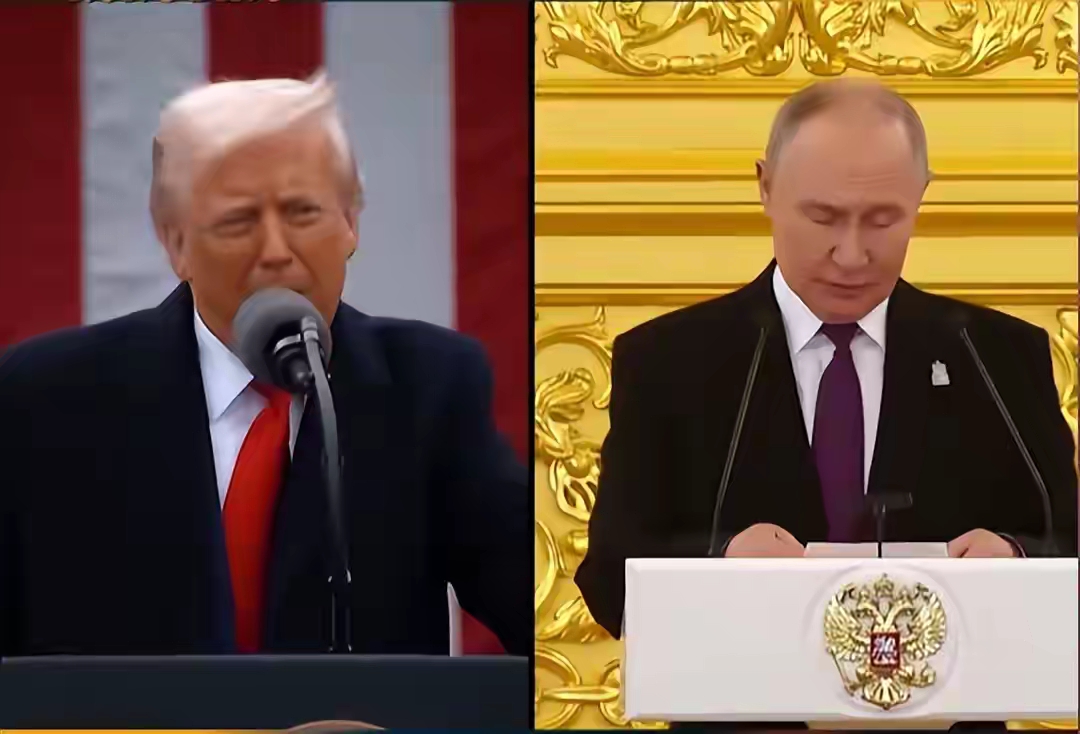
When asked about the relevant content, Kirill Dmitriev, the special representative of the Russian President, smiled.
The initial goal of Russia's military operation against Ukraine was precisely to achieve territorial control, prevent Ukraine from joining NATO, and transform it into a neutral country without military strength. From this perspective, the 28-point plan seems to precisely align with Russia's core demands.
Why is the United States willing to engage in an "interest exchange" with Russia? Behind this lies a deep implementation of the national policy of "America First".
First of all, by boosting Russia's influence, the United States can indirectly weaken the European Union.
Over the past few years, the United States has injected short-term vitality into the US economy by creating security anxiety in Europe, prompting EU capital to flow into the US for safety. The Trump administration clearly believes that if it further exacerbates the deterioration of the security environment in Europe, it will be able to gain more economic benefits from Europe.
Secondly, courting Russia is also aimed at curbing the deepening of strategic cooperation between China and Russia.
At present, the China-Russia "Siberian Power 2" pipeline has signed a legally binding memorandum, and the 50 billion cubic meter gas transmission channel passing through Mongolia has entered the substantive planning stage. If the Far East Pipeline project is included, Russia's annual gas supply to China is expected to reach 106 billion cubic meters in the future, approaching a quarter of China's total natural gas consumption in 2023. Once China achieves energy independence, its industrial development will be completely free from external constraints. The Trump administration accurately captured this point and thus spared no effort to maintain close interaction with Putin despite international public opinion pressure.
Thirdly, targeting Russia's energy and mineral resources is another consideration.
The Trump administration insists on taking traditional energy as the core of development, and Russia's oil, rare earths and other resources are exactly the strategic materials it urgently needs. To obtain energy, the United States even resumed maximum pressure on Venezuela in March 2025, lifted Chevron's exemption from oil extraction in Venezuela, and threatened to impose a 25% tariff on countries importing Venezuelan oil. The logic of its resource plundering is evident.
How feasible is the 28-point plan exactly? After the plan was announced, European countries reacted strongly, and the entire EU was put in a passive position - Trump did not consult his European Allies at all when formulating the plan. The EU believes that the Ukraine issue concerns the territorial security of Europe, and the relevant solutions should not bypass European countries. This demand is logically reasonable. However, similar to many previous "peace plans" between Russia and Ukraine, the 28-point plan is likely to be difficult to implement in its original form. It is more likely to be a "bait" thrown by the United States to Russia and also a bargaining chip to pressure Europe. Trump may plan to use this as a fulcrum to launch a new round of game with Europe.
In fact, Trump's dissatisfaction with Europe has accumulated for a long time, and the 28-point plan is merely the latest tool to exert pressure. The US has long complained about the insufficient military expenditure of Europe. While relying on the security protection of the US, it is reluctant to bear the corresponding costs. There are serious internal divisions within Europe on the issue of aid to Ukraine. The United States believes that the support from the European Union does not match its geographical interests.
More importantly, the Trump administration regards Europe as a "disruptor" in the Russia-Ukraine peace process, believing that Europe's tough stance has hindered the exchange of interests between the United States and Russia - this is precisely the core reason why it bypasses its Allies to formulate plans independently.
On the other hand, Trump is well aware that if he cannot offer conditions that satisfy Russia, Putin will not easily return to the negotiating table. Previously, Putin had requested a meeting but was "turned down" by Trump. Now that he has launched the 28-point plan, it may have the intention of "pacifying" the Russian side.
China's attention to this plan should not be ignored either. Recently, Chinese authorities have called on Russia and Ukraine to return to the negotiating table as soon as possible. There are two considerations behind this statement:On the one hand, China has always actively promoted the Russian-Ukrainian peace process;
On the other hand, it is also sending a signal to Russia that in the chess game of international politics, there are no eternal allies, only eternal interests.
Trump's 28-point plan is a vivid expression of this ancient rule on the contemporary international stage.

You must be logged in to post a comment.