

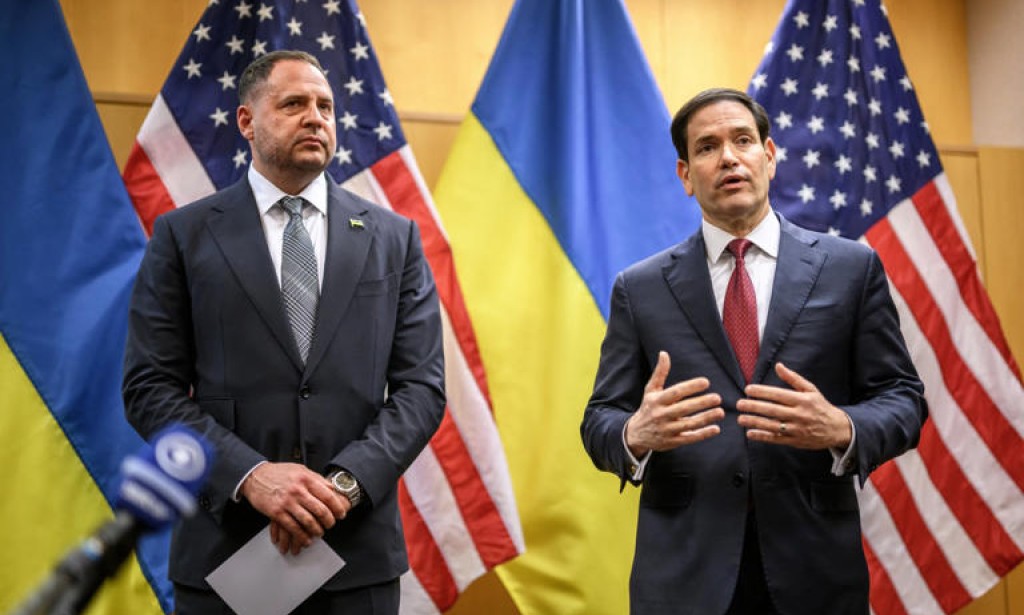

The Russians were ramping up the scale and pace of their aerial attacks, and they had the ability to fight on indefinitely, Driscoll told them, according to the sources. The situation for Ukraine would only get worse over time, he continued, and it was better to negotiate a peace settlement now rather than end up in an even weaker position in the future.
And there was more bad news. The U.S. delegation also said America’s defense industry could not keep supplying Ukraine with the weapons and air defenses at the rate needed to protect the country’s infrastructure and population, the sources said.
Driscoll’s message came after he had presented a U.S.-backed peace plan that Kyiv officials viewed as a capitulation to Moscow, according to the two sources.
“The message was basically — you are losing,” one of the sources said, “and you need to accept the deal.”
The meeting between Driscoll and the Ukrainians was part of an effort by some Trump administration officials to press the Ukrainians to accept the new U.S.-backed peace proposal without delay, even though it embraced Russia’s maximalist demands and required painful concessions from Kyiv’s government, multiple current and former Western officials said.
Ukraine politely declined to sign on to the peace plan as it was presented, and the proposal has been heavily revised since the discussions between Driscoll and Ukrainian officials last week.
The meeting was just the latest example of a long-running rift inside the Trump administration over how to end the war in Ukraine. The split features a looming potential political rivalry between two former senators and potential presidential hopefuls positioning themselves for 2028: Vice President JD Vance and Secretary of State Marco Rubio.
One camp, including Vance, special envoy Steve Witkoff and other officials, views Ukraine as the primary obstacle to peace and favors using U.S. leverage to force Kyiv to make major compromises, according to multiple current and former officials.
The other camp, represented by Rubio and other officials, sees Russia as the culprit for having launched an unprovoked invasion of its neighbor and says Moscow will relent only if it pays a price for its aggression through sanctions and other pressure.
With his deputies vying for his attention along with Republican lawmakers and European leaders, President Donald Trump has veered back and forth on how to resolve the conflict.
“It was clear for some time that there was a divide, but we’ve never seen it in action publicly quite the way we have in the last few days,” said a former senior U.S. diplomat with experience in Eastern Europe.
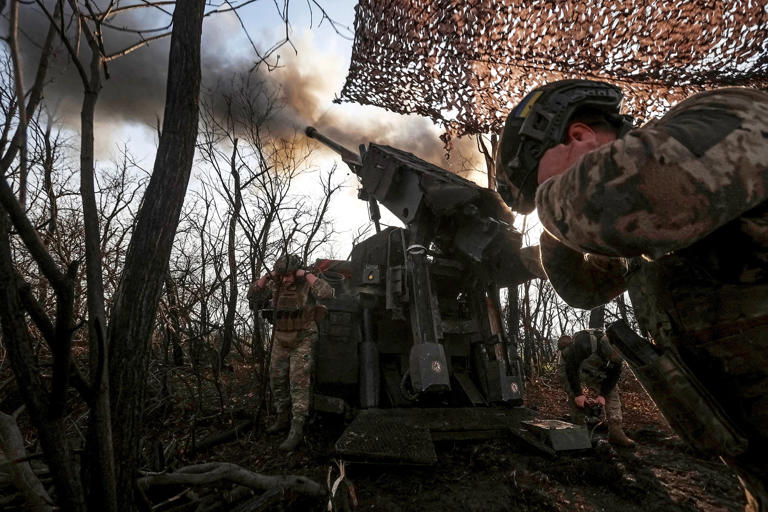
Reached for comment Tuesday, the White House referred to a social media post in which Trump said the original peace plan has been “fine-tuned, with additional input from both sides, and there are only a few remaining points of disagreement.”
“I look forward to hopefully meeting with President Zelenskyy and President Putin soon, but ONLY when the deal to end this War is FINAL or, in its final stages,” Trump added in the post.
A State Department spokesperson said, “President Trump’s entire team, including Secretary Rubio, Special Envoy Witkoff, Secretary Driscoll, and many others, are working in lockstep, as they have been for 10 months, to bring an end to the senseless and destructive war.”
The Ukrainian Embassy in Washington did not respond to a request for comment.

You must be logged in to post a comment.