

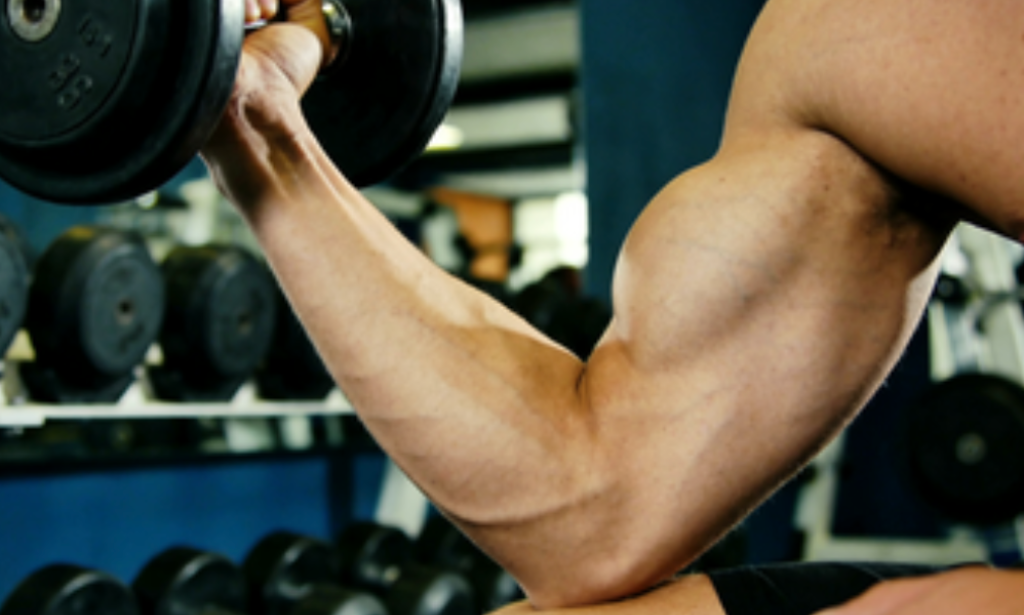

Arms are one of the most sought-after muscle groups for lifters—they’re highly visible, add to upper body aesthetics, and are a symbol of strength. Arm training targets two main muscle groups: the biceps (front of the arms) and the triceps (back of the arms). A common mistake lifters make is focusing too much on biceps and neglecting triceps, but triceps make up two-thirds of the arm’s size—so balanced training is key for bulky, defined arms. Effective arm training requires a mix of compound movements that build mass and isolation movements that target each muscle group for definition. Below is a ranked list of the top 5 arm training movements, based on their ability to build bicep and tricep mass, improve definition, and create balanced arm development.
Rank 1: Barbell Curls. Barbell curls take the top spot as the ultimate bicep exercise. This compound movement targets the entire bicep muscle (brachialis and brachioradialis, which add thickness to the arms) and builds mass and strength. Barbell curls are simple but effective, allowing you to lift heavy weights and stimulate maximum muscle fiber recruitment. To perform barbell curls, stand with your feet shoulder-width apart, grip the barbell with an underhand (supinated) grip shoulder-width apart. Keep your elbows close to your sides, your core engaged, and your back straight. Curl the bar up to your shoulders by squeezing your biceps—keep your upper arms stationary (do not swing them). Pause at the top, squeezing your biceps hard, then slowly lower the bar back to the starting position. Avoid using momentum to swing the bar up—this is a common cheat that reduces bicep activation and increases injury risk. Beginners should start with a light weight to master form, while advanced lifters can add weight or try variations like wide-grip barbell curls (to target the outer biceps) or close-grip barbell curls (to target the inner biceps).
Rank 2: Tricep Dips (Tricep-Focused). Tricep dips take the second spot as the best tricep exercise for building mass and strength. While dips can target the chest if you lean forward, adjusting your form to lean back shifts the focus to the triceps. This compound movement targets all three heads of the triceps (lateral, medial, long), making it great for overall tricep development. To perform tricep-focused dips, grip the dip bars with a medium grip, jump up to a starting position with your arms fully extended. Lean back slightly, keep your elbows close to your body, and engage your core. Lower your body by bending your elbows until they’re bent at a 90-degree angle—keep your body upright to avoid chest activation. Push through your hands to drive your body back up to the starting position, squeezing your triceps at the top. If you’re a beginner, use a resistance band for assistance. Advanced lifters can add weight by using a weight belt with additional plates, or by performing weighted tricep dips.
Rank 3: Hammer Curls. Hammer curls take the third spot for their ability to build arm thickness by targeting the brachialis (a muscle under the biceps) and the forearms. Many lifters focus only on the biceps, but the brachialis is what gives the arms a “thick” appearance. Hammer curls use a neutral grip (palms facing each other), which shifts tension from the biceps to the brachialis and forearms. To perform hammer curls, stand with your feet shoulder-width apart, hold a dumbbell in each hand with a neutral grip (palms facing inward). Keep your elbows close to your sides, engage your core, and curl the dumbbells up to your shoulders—keep your wrists straight to avoid strain. Squeeze your forearms and brachialis at the top, then slowly lower the dumbbells back to the starting position. Avoid swinging your arms or using momentum. Hammer curls are also great for improving grip strength, which translates to better performance in other exercises like deadlifts and pull-ups. Beginners should start with light dumbbells, while advanced lifters can add weight or perform alternating hammer curls to target each arm individually.
Rank 4: Overhead Tricep Extensions. Overhead tricep extensions are an isolation exercise that takes the fourth spot for their ability to target the long head of the triceps—an area that’s crucial for tricep definition and “peak.” The long head of the triceps is often hard to isolate with compound movements, making overhead extensions a great accessory exercise. To perform overhead tricep extensions, stand or sit with your feet shoulder-width apart, hold a dumbbell or barbell with both hands above your head (palms facing forward). Keep your elbows close to your ears (this is key to isolating the triceps) and engage your core. Lower the weight behind your head by bending your elbows until they’re bent at a 90-degree angle. Then, extend your arms back up to the starting position, squeezing your triceps hard at the top. Avoid arching your back or letting your elbows flare out—this reduces tricep activation. You can perform this exercise with a single dumbbell (two hands) or two dumbbells (one hand each) for added balance. Beginners should start with a light weight and focus on controlled movements, while advanced lifters can add weight or perform drop sets.
Rank 5: Concentration Curls. Concentration curls round out our top 5 list for their ability to isolate the biceps and target any weak points or imbalances. This isolation exercise allows for maximum muscle contraction, making it great for building bicep definition and a “peak” in the biceps. To perform concentration curls, sit on a bench with your legs spread apart. Rest your right arm on your right thigh, with your elbow bent and your hand hanging off the edge of your thigh. Hold a dumbbell in your right hand (palms facing up). Keep your upper arm stationary, and curl the dumbbell up to your shoulder, squeezing your bicep hard at the top. Then, slowly lower the dumbbell back to the starting position. Repeat with your left arm. Concentration curls eliminate momentum, as your upper arm is stabilized by your thigh, ensuring that all tension is on the biceps. Avoid swinging your arm or using your shoulder to help lift the weight. Beginners should start with a light weight, while advanced lifters can add weight or perform slow, controlled reps to increase intensity.
To build bulky, defined, and balanced arms, we recommend combining these five exercises into your routine: start with barbell curls (compound, heavy load) to build bicep mass, follow with tricep dips for tricep mass, add hammer curls for arm thickness and forearms, use overhead tricep extensions for tricep definition, and finish with concentration curls for bicep isolation and weak point targeting. Remember to balance bicep and tricep training—for every bicep exercise, do at least one tricep exercise. Arm muscles are small, so they respond best to moderate weights and higher reps (12-15 reps per set). Rest for 60-90 seconds between sets to keep the muscles pumped. Focus on proper form and controlled movements, and gradually increase the weight or intensity to keep challenging your muscles. With consistent training, you’ll develop arms that are not only bulky and defined but also strong and balanced.

You must be logged in to post a comment.