


Shoulders are one of the most complex and versatile muscle groups in the body, consisting of three main “heads”: the anterior delts (front), medial delts (side), and posterior delts (rear). A well-rounded shoulder workout must target all three heads to build 3D, strong, and symmetrical shoulders that not only look impressive but also support a wide range of upper body movements. Many lifters make the mistake of focusing only on the front delts (thanks to exercises like bench press), leading to imbalanced, “rounded shoulder” posture and increased injury risk. The key to effective shoulder training is balance—combining compound movements that build overall strength with isolation movements that target each head individually. Below is a ranked list of the top 5 shoulder training movements, based on their ability to target all three deltoid heads, build strength and mass, and improve functional capability.
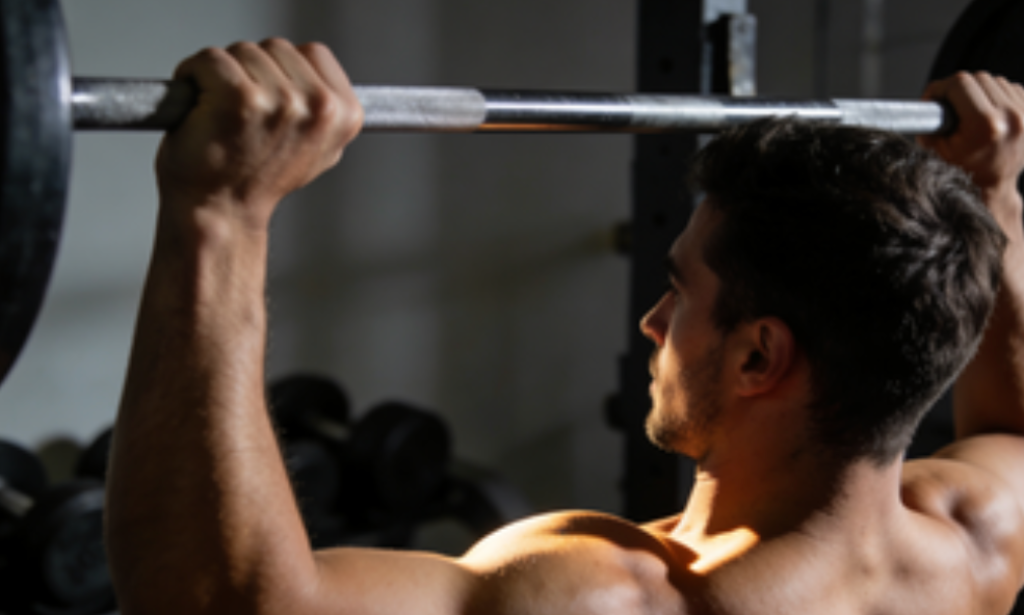
Rank 1: Overhead Barbell Press (Military Press). The overhead barbell press, also known as the military press, takes the top spot as the king of shoulder exercises. This compound movement targets all three heads of the delts, as well as the triceps and upper chest, making it the most effective exercise for building overall shoulder strength and mass. Unlike many shoulder exercises that focus on a single head, the overhead press engages the entire shoulder complex, promoting balanced development. It also builds core stability and upper body power, as you’re required to lift a heavy load overhead while maintaining proper form. To perform the overhead barbell press, stand with your feet shoulder-width apart, grip the barbell with a shoulder-width grip (palms facing forward), and rest the bar at chest height (on your upper chest and shoulders). Engage your core, keep your back straight, and press the bar straight up until your arms are fully extended (avoid locking your elbows). Pause at the top, then slowly lower the bar back to chest height. Avoid arching your lower back excessively—this shifts the tension away from the shoulders and onto the lower back. If you have shoulder mobility issues, you can perform the exercise seated (seated overhead press) to reduce lower back strain. Beginners should start with a light weight to master form, while advanced lifters can add weight or try variations like the push press (using leg drive to lift heavier weights) for increased intensity.
Rank 2: Lateral Raises. Lateral raises take the second spot as the best isolation exercise for the medial delts (side delts)—the muscle responsible for shoulder width. A wide, “capped” shoulder appearance comes from well-developed medial delts, which are often neglected in compound movements. Lateral raises are simple but effective, providing direct tension on the medial delts throughout the movement. To perform lateral raises, stand with your feet shoulder-width apart, hold a dumbbell in each hand at your sides (palms facing inward), and keep your elbows slightly bent (this reduces elbow strain). Engage your core, keep your shoulders relaxed, and raise your arms out to the sides until they’re parallel to the floor—imagine you’re pouring water out of the dumbbells to keep your palms facing downward. Pause at the top, squeezing your medial delts, then slowly lower your arms back to the starting position. Avoid using heavy weights here—using too much weight will cause you to swing your arms, shifting tension to the traps and shoulders, which reduces the effectiveness of the exercise. Instead, use a light weight that allows you to perform 12-15 reps with strict form. You can also perform lateral raises seated to reduce body sway, or use cables for constant tension.
Rank 3: Front Raises. Front raises take the third spot for their ability to target the anterior delts (front delts). While the anterior delts are engaged in compound movements like the bench press and overhead press, front raises isolate them, allowing for focused development. This is important for balanced shoulders, as the anterior delts are often overworked but underdeveloped in terms of size and definition. To perform front raises, stand with your feet shoulder-width apart, hold a dumbbell in each hand at your sides (palms facing your body). Keep your elbows slightly bent and your core engaged. Raise your arms straight out in front of you until they’re parallel to the floor—keep your palms facing downward to maximize anterior delt activation. Pause at the top, then slowly lower your arms back to the starting position. Avoid swinging your arms or using momentum—control is key here. You can vary the exercise by using a barbell (front barbell raises) or cables (cable front raises) for added intensity. Beginners should start with light dumbbells, while advanced lifters can add weight or perform alternating front raises (raising one arm at a time) to target each shoulder individually.
Rank 4: Rear Delt Flyes. Rear delt flyes take the fourth spot for their crucial role in targeting the posterior delts (rear delts)—the most neglected head of the shoulders. Weak posterior delts are a common cause of rounded shoulders and poor posture, as they’re responsible for pulling the shoulders back. Rear delt flyes isolate the posterior delts, helping to balance out front delt development and improve posture. To perform rear delt flyes, sit on a bench with your torso bent forward 45-60 degrees (you can also perform this exercise standing), hold a dumbbell in each hand (palms facing each other), and let your arms hang straight down. Keep your elbows slightly bent and your core engaged. Raise your arms out to the sides until they’re parallel to the floor—squeeze your rear delts hard at the top of the movement. Then, slowly lower your arms back to the starting position. Avoid rounding your back or using momentum to swing the dumbbells up. You can also perform this exercise using a cable machine (cable rear delt flyes) for constant tension, or use a resistance band if you don’t have dumbbells. Incorporate rear delt flyes into your routine 2-3 times per week to improve posture and balance.
Rank 5: Arnold Presses. Named after bodybuilding legend Arnold Schwarzenegger, the Arnold press rounds out our top 5 list for its ability to target all three heads of the delts in a single movement. This variation of the overhead press adds a rotational component that increases muscle activation and targets each delt head at different points in the movement. Arnold presses are great for adding variety to your shoulder routine and promoting balanced, 3D shoulder development. To perform Arnold presses, stand with your feet shoulder-width apart, hold dumbbells at shoulder height with your palms facing your body (supinated grip). Engage your core, keep your back straight, and press the dumbbells up while rotating your palms outward (pronated grip) until your arms are fully extended and your palms are facing forward. Pause at the top, then slowly lower the dumbbells back to the starting position while rotating your palms inward. The rotation of the hands ensures that the anterior, medial, and posterior delts are all engaged throughout the movement. Avoid arching your lower back or using momentum—focus on controlled, smooth movements. Beginners should start with light dumbbells to master the rotation, while advanced lifters can add weight or perform seated Arnold presses for added core stability.
To build 3D, strong, and symmetrical shoulders, we recommend combining these five exercises into your routine: start with the overhead barbell press (compound, heavy load) to build overall shoulder strength and mass, follow with lateral raises for medial delt width, add front raises for anterior delt development, use rear delt flyes to target the posterior delts and improve posture, and finish with Arnold presses for balanced activation of all three heads. Remember to balance pushing and pulling exercises—for every shoulder push exercise (like overhead press), do a pulling exercise (like face pulls or rear delt flyes) to avoid imbalances. Rest for 2-3 minutes between sets for compound exercises and 60-90 seconds for isolation exercises. Focus on proper form and controlled movements, and gradually increase the weight or intensity to keep challenging your muscles. With consistent training, you’ll develop shoulders that are not only strong and aesthetic but also capable of supporting a wide range of upper body movements.

You must be logged in to post a comment.